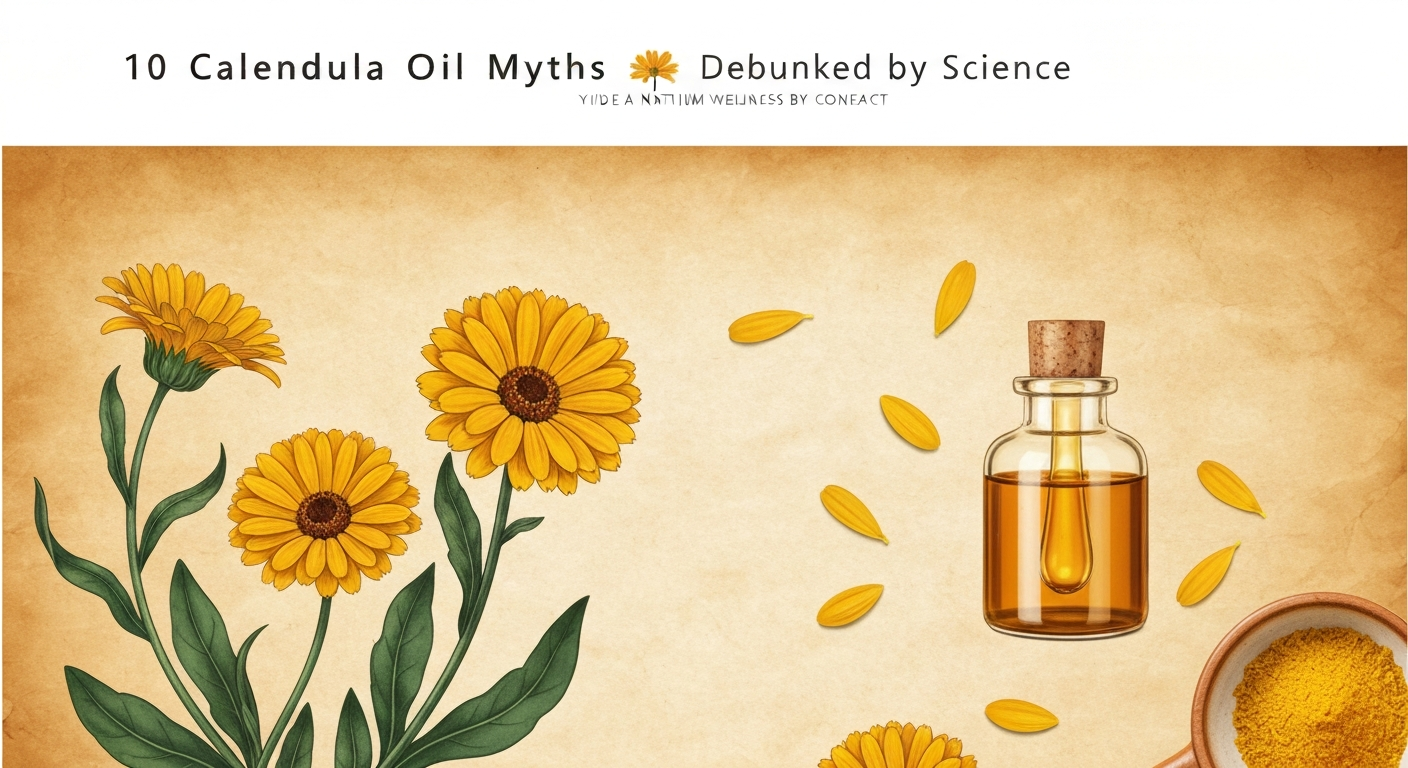
10 Calendula Oil Myths Debunked by Science
In the world of botanical skincare, few oils spark as much curiosity—and confusion—as calendula oil. This golden extract from the cheerful marigold flower has been cherished for centuries, but along the way, numerous myths have taken root alongside the facts. As interest in natural ingredients continues to bloom, it's more important than ever to separate calendula oil myths from scientifically-supported information.
Whether you're a seasoned botanical enthusiast or just beginning to explore natural skincare, understanding the difference between calendula oil facts vs fiction empowers you to make informed choices. Let's examine ten persistent myths about calendula oil and discover what current research actually reveals about this treasured botanical extract.
Understanding Calendula Oil: The Foundation of Facts
Before we dive into myth-busting, it's essential to understand what calendula oil actually is. True calendula oil is an infused oil, created by gently extracting the beneficial compounds from Calendula officinalis petals using carrier oils like olive, sunflower, or coconut oil. This traditional extraction method preserves the plant's naturally occurring compounds, including flavonoids, triterpenes, and carotenoids.
The confusion often begins with terminology. Many products labeled "calendula oil" are actually calendula-infused carrier oils, not pure essential oils. This distinction matters when evaluating research and understanding what science tells us about calendula oil properties.
Myth #1: Calendula Oil Is the Same as Marigold Essential Oil
The Myth
Many people believe that calendula oil and marigold essential oil are identical products, often using the terms interchangeably in discussions about natural skincare.
The Science-Based Truth
Research indicates that while both come from marigold flowers, they are distinctly different products with different properties. Calendula oil is typically an infused oil created through gentle extraction methods, while marigold essential oil (when available) is produced through steam distillation and contains highly concentrated volatile compounds.
Studies examining calendula preparations show that the infusion process preserves different compounds than distillation methods. The infused oil retains fat-soluble components like carotenoids and flavonoids, while essential oil extraction captures primarily volatile compounds.
Why This Myth Persists
The confusion stems from common names—Calendula officinalis is often called pot marigold. Additionally, marketing materials sometimes blur these distinctions, leading consumers to expect essential oil properties from infused calendula oil.
Myth #2: All Calendula Oil Is Created Equal
The Myth
A widespread belief suggests that calendula oil quality doesn't vary significantly between products, making any calendula oil as effective as another.
The Science-Based Truth
Research suggests that calendula oil quality can vary dramatically based on several factors. Studies examining different extraction methods indicate that solvent choice, extraction time, temperature, and flower-to-oil ratios all influence the final product's compound profile.
Evidence indicates that calendula oil made with organic flowers, cold-pressed carrier oils, and traditional slow-infusion methods tends to retain higher levels of beneficial compounds compared to mass-produced alternatives using heat or chemical extraction.
Why This Myth Persists
Marketing often emphasizes the calendula name without explaining extraction methods or quality indicators. Without this context, consumers assume all products deliver similar results.
Myth #3: Calendula Oil Works Instantly
The Myth
Some enthusiasts expect immediate, dramatic results from calendula oil application, believing it provides instant transformation for skin concerns.
The Science-Based Truth
Research on botanical skincare ingredients suggests that consistent, regular use over time may be more important than immediate effects. Studies examining calendula's compounds indicate they may work gradually to support skin's natural processes.
Evidence from traditional use and modern research suggests that people typically notice changes after several weeks of consistent application, aligning with natural skin renewal cycles that occur approximately every 28 days.
Why This Myth Persists
Modern beauty marketing often promises instant results, creating unrealistic expectations for natural ingredients that work more gently and gradually than synthetic alternatives.
Myth #4: More Concentrated Always Means Better
The Myth
Many believe that higher concentrations of calendula in oil preparations automatically translate to superior effectiveness.
The Science-Based Truth
Research suggests that optimal concentration depends on intended use and individual skin sensitivity. Studies indicate that while higher concentrations contain more active compounds, they may also increase the likelihood of skin sensitivity in some individuals.
Evidence from traditional herbalism suggests that moderate concentrations used consistently may be more beneficial than occasional use of highly concentrated preparations. The key appears to be finding the right balance for individual needs.
Why This Myth Persists
Consumer psychology often equates "more" with "better," and marketing materials may emphasize concentration percentages without providing context about optimal usage levels.
Myth #5: Calendula Oil Has No Side Effects
The Myth
Some users assume that because calendula oil is natural, it's completely risk-free and suitable for everyone without any precautions.
The Science-Based Truth
While calendula oil is generally well-tolerated, research indicates that some individuals may experience sensitivity reactions. Studies suggest that people with ragweed, daisy, or chrysanthemum allergies may be more likely to react to calendula products.
Evidence indicates that patch testing before first use is advisable, and some research suggests avoiding calendula during pregnancy and breastfeeding unless approved by a healthcare provider.
Why This Myth Persists
The "natural equals safe" assumption is common but oversimplified. Natural ingredients can still cause reactions in sensitive individuals or interact with certain conditions.
Myth #6: Calendula Oil Can Replace All Other Skincare Products
The Myth
Enthusiastic supporters sometimes claim that calendula oil alone can address all skincare needs, making other products unnecessary.
The Science-Based Truth
Research on calendula oil benefits suggests it may support certain skin functions, but evidence indicates that comprehensive skincare typically requires multiple approaches. Studies suggest calendula oil works well as part of a routine but may not address all skin needs independently.
Evidence indicates that factors like sun protection, proper cleansing, and hydration remain important regardless of calendula oil use. Research suggests viewing calendula oil as a valuable addition to, rather than replacement for, a well-rounded skincare approach.
Why This Myth Persists
Simplicity appeals to consumers overwhelmed by complex skincare routines. The desire for a "one-product solution" can lead to unrealistic expectations about any single ingredient's capabilities.
Myth #7: Homemade Calendula Oil Is Always Superior
The Myth
Many believe that homemade calendula oil preparations are automatically superior to commercial products in terms of quality and effectiveness.
The Science-Based Truth
Research suggests that while homemade preparations can be excellent, quality depends heavily on technique, ingredients, and storage conditions. Studies indicate that proper extraction requires specific flower-to-oil ratios, controlled temperatures, and adequate infusion time.
Evidence suggests that commercial producers may have advantages in terms of standardization, quality control, and shelf stability, while home preparation offers freshness and ingredient control benefits.
Why This Myth Persists
The DIY movement and desire for ingredient transparency fuel the belief that homemade automatically means better, without considering the technical aspects of proper extraction.
Myth #8: Calendula Oil Never Expires
The Myth
Some users believe that calendula oil, being a natural product, doesn't degrade over time and maintains its properties indefinitely.
The Science-Based Truth
Research on botanical oils indicates that calendula oil, like all plant-based oils, is subject to oxidation and degradation over time. Studies suggest that the carrier oil's stability largely determines the product's shelf life.
Evidence indicates that factors like light exposure, heat, and air contact accelerate degradation. Research suggests that proper storage in dark, cool conditions can extend shelf life, but eventually, all calendula oil preparations will lose potency.
Why This Myth Persists
Natural products are sometimes perceived as unchanging, and subtle degradation signs (like slight color or scent changes) may be overlooked or attributed to normal variation.
Myth #9: Calendula Oil Works the Same for Everyone
The Myth
Many assume that calendula oil produces identical results for all users, regardless of individual skin characteristics or conditions.
The Science-Based Truth
Research in calendula oil science suggests that individual responses can vary significantly based on factors like skin type, age, existing conditions, and genetic variations in how people process plant compounds.
Studies indicate that what works well for one person may be less effective for another, even with identical products and application methods. Evidence suggests that finding the right calendula oil preparation and usage pattern often requires individual experimentation.
Why This Myth Persists
Testimonials and reviews often create the impression of universal effectiveness, while negative or neutral experiences may be shared less frequently.
Myth #10: Scientific Research on Calendula Is Limited
The Myth
Skeptics sometimes claim that calendula oil lacks scientific backing and that its traditional use isn't supported by modern research.
The Science-Based Truth
Current research indicates a growing body of scientific literature examining calendula's compounds and properties. Studies have investigated various aspects of calendula, from its chemical composition to its traditional applications in skincare.
Evidence shows that researchers have identified numerous bioactive compounds in calendula, including flavonoids, saponins, and triterpenes. While more research is always beneficial, the existing scientific foundation provides valuable insights into calendula's properties.
Why This Myth Persists
The gap between traditional knowledge and modern research can create the impression that natural ingredients lack scientific support, when in reality, research is ongoing and expanding.
Making Informed Decisions About Calendula Oil
Understanding these myths and the scientific reality behind them empowers you to make informed decisions about calendula oil. Rather than expecting miraculous results or dismissing it entirely, research suggests approaching calendula oil with realistic expectations based on current evidence.
When evaluating calendula oil products, evidence indicates that factors like extraction method, carrier oil quality, storage conditions, and individual skin characteristics all play important roles in the experience you might have.
Remember that while research provides valuable insights, individual experiences may vary. What works wonderfully for one person may be less suitable for another, and that's perfectly normal when dealing with natural botanical products.
The Future of Calendula Oil Research
As scientific interest in botanical skincare ingredients continues to grow, we can expect more detailed research on calendula oil's properties and optimal applications. Current studies are exploring various aspects of calendula's compounds, and future research may provide even clearer guidance on how to maximize its potential benefits.
By staying informed about both traditional knowledge and emerging research, we can appreciate calendula oil for what it truly offers—a time-tested botanical ingredient with interesting properties that continues to earn its place in the natural skincare world.
Remember: While this article presents research-based information about calendula oil, it's not intended to provide medical advice. Always consult with qualified healthcare providers regarding specific skin concerns or conditions, and perform patch tests before using any new skincare product.