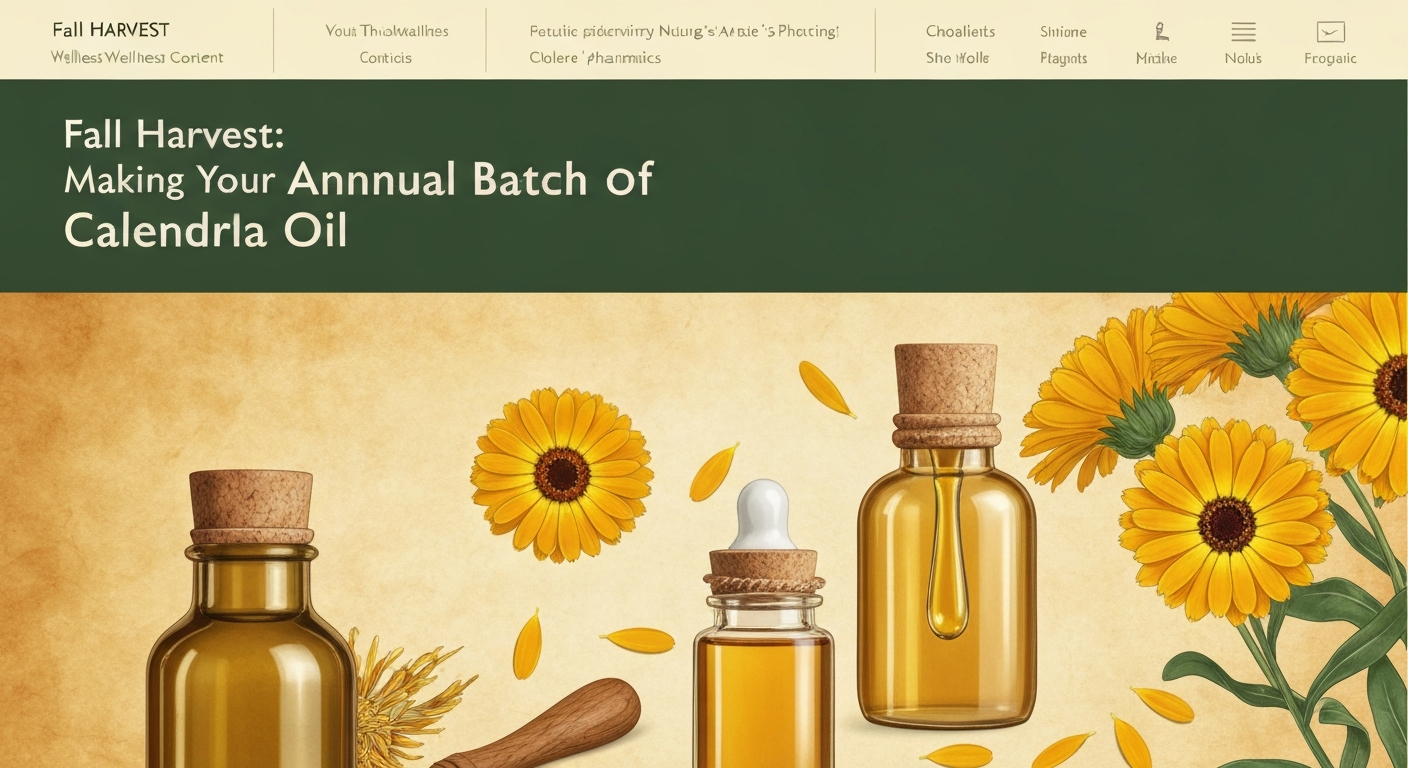
Fall Harvest: Making Your Annual Batch of Calendula Oil
As autumn's golden light filters through gardens across the country, seasoned herbalists know that October brings one of the most rewarding rituals of the year: the calendula harvest. This vibrant orange-petaled flower, often called "nature's golden healer," reaches its peak potency just as the season begins to turn, making fall the perfect time to create your annual batch of homemade calendula oil.
The timing isn't coincidental. Calendula flowers that have weathered summer's heat and absorbed the season's energy are said to contain their highest concentration of beneficial compounds just before the first frost. This makes autumn harvest not just traditional, but practical for those who appreciate the art of botanical oil making.
Why Fall is Prime Calendula Season
Unlike many flowers that fade as temperatures drop, calendula actually thrives in cooler weather. These resilient blooms continue producing fresh flowers well into October and sometimes November, depending on your growing zone. The cooler nights and shorter days signal the plant to concentrate its energy, potentially increasing the density of the plant compounds that make calendula oil so prized among traditional herbalists.
Fall-harvested calendula petals often display deeper, more saturated colors—a visual indicator that many oil makers believe correlates with the flower's potential potency. The cooler morning air also means less moisture in the petals, which is crucial for creating high-quality infused oils that won't develop unwanted moisture-related issues during the infusion process.
Reading the Signs: When to Harvest
Timing your harvest correctly makes all the difference in oil quality. Look for these indicators that your calendula is ready:
- Full bloom maturity: Flowers should be completely open with vibrant, unfaded petals
- Morning timing: Harvest after morning dew has evaporated but before the heat of the day
- Dry conditions: Choose a day that's been dry for at least 24 hours
- Peak color: Petals should show deep orange or yellow tones without brown edges
- Fresh appearance: Avoid wilted or damaged flowers
Preparing for Your Annual Oil Making Session
Creating your yearly batch of calendula oil is both an art and a science. Unlike store-bought oils, your homemade version allows you to control every aspect of the process, from the variety of calendula you choose to the carrier oil that will hold and preserve the botanical infusion.
Gathering Your Materials
Before you begin harvesting, assemble these essential supplies:
- Clean, sharp scissors or pruning shears
- Breathable harvest baskets (avoid plastic bags)
- High-quality carrier oil (olive, sweet almond, or sunflower oil work well)
- Glass jars with tight-fitting lids
- Fine-mesh strainer or cheesecloth
- Labels for dating your batches
- Dark glass bottles for final storage
The choice of carrier oil significantly impacts your final product's character. Extra virgin olive oil, while traditional, imparts a stronger scent that some find overwhelming. Sweet almond oil offers a lighter, more neutral base that allows the subtle floral notes of calendula to shine through. For those interested in the complete process, our detailed guide on how to make calendula oil covers carrier oil selection in greater depth.
The Solar Infusion Method: Harnessing Autumn's Gentle Sun
While there are several methods for creating calendula oil, the solar infusion technique feels particularly appropriate for fall harvest batches. This gentle process takes advantage of autumn's mellower sunshine to slowly extract the beneficial compounds from your freshly harvested petals.
Step-by-Step Solar Infusion Process
- Prepare the petals: Remove petals from flower heads, discarding any damaged or discolored pieces
- Ensure dryness: Allow petals to air dry for 2-3 hours if any moisture remains
- Fill jars: Pack clean glass jars about 3/4 full with dried petals
- Add oil: Pour carrier oil over petals until completely covered with 1 inch extra
- Remove air bubbles: Gently stir and tap jar to release trapped air
- Seal and label: Close jars tightly and label with date and oil type
- Solar infusion: Place jars in a warm, sunny location for 2-4 weeks
- Daily attention: Gently shake jars daily and check oil levels
Autumn-Specific Considerations
Fall oil making presents unique advantages and challenges. The gentler autumn sun provides ideal conditions for slow infusion without overheating, but shorter days mean you'll need to be patient. Many herbalists find that fall-made oils benefit from slightly longer infusion periods—3 to 4 weeks instead of the traditional 2 weeks.
Temperature fluctuations common in autumn can actually benefit the infusion process. The daily warming and cooling cycle may help the oil penetrate plant materials more effectively. However, avoid placing jars where they might freeze, as this can damage both the oil and the botanical materials.
Advanced Techniques for Seasoned Oil Makers
If this isn't your first year making calendula oil, consider these refinements to elevate your annual batch:
The Double Infusion Method
For those seeking a more concentrated oil, the double infusion technique involves straining your first batch after 2-3 weeks, then using that calendula-infused oil to create a second infusion with fresh petals. This process, traditionally used by experienced herbalists, may result in oils with deeper color and more pronounced botanical characteristics.
Blending Harvest Periods
Some oil makers create signature blends by combining early fall harvests with late summer flowers, or by mixing different calendula varieties. If you've been growing calendula throughout the season, you might experiment with combining petals from different harvest dates to create a more complex final product.
Quality Control and Testing
As your oil infuses over the coming weeks, monitor it carefully for signs of proper development. High-quality calendula oil typically develops a golden to deep amber color, though the exact shade depends on your carrier oil and calendula variety.
Signs of Successful Infusion
- Gradual color deepening over the infusion period
- No signs of cloudiness or separation
- Pleasant, mild floral scent
- No off odors or signs of rancidity
- Petals that have released their color into the oil
When Things Go Wrong
Sometimes batches don't develop as expected. Cloudiness might indicate moisture contamination, while off odors could suggest bacterial growth. Don't hesitate to discard questionable batches—the time invested isn't worth risking skin irritation from compromised oil.
Straining and Storage: Preserving Your Golden Harvest
After your chosen infusion period, the straining process requires patience and attention to detail. Use multiple layers of fine cheesecloth or a quality mesh strainer to remove all plant material. Some oil makers prefer to let gravity do the work, allowing the oil to strain slowly overnight rather than pressing or squeezing the plant matter.
For long-term storage, transfer your finished oil to dark glass bottles, leaving minimal headspace to reduce oxidation. Label each bottle with the harvest date, infusion method, and carrier oil used. Properly made and stored calendula oil can maintain its quality for up to a year when kept in a cool, dark location.
Seasonal Variations and Creative Approaches
Fall harvesting opens doors to unique seasonal variations. Consider these autumn-inspired approaches:
Mixed Autumn Harvest
Combine your calendula harvest with other fall flowers like rose hips or chamomile for complex, seasonal blends. However, research each addition carefully, as different plants have varying oil-infusion requirements.
Moon Cycle Timing
Some traditional herbalists time their harvest and oil making to lunar cycles, believing that waxing moons support extraction processes. While scientific evidence for this practice is limited, many oil makers report satisfaction with timing their annual batch to coincide with October's full moon.
Building Your Annual Tradition
Creating calendula oil each fall can become a meaningful seasonal ritual that connects you to botanical traditions spanning centuries. Keep detailed notes about each year's batch—weather conditions, harvest timing, infusion methods, and results. Over time, you'll develop intuition about what works best in your specific climate and growing conditions.
Consider involving family members or friends in the process. Many herbalists find that sharing the harvest and oil-making experience creates lasting memories while passing down valuable traditional knowledge.
For those new to the process or looking to refine their technique, exploring various calendula oil recipes can provide additional inspiration and methodology options.
Safety Considerations and Best Practices
Important Safety Note: While calendula oil has been used traditionally for various purposes, always perform a patch test before applying any homemade oil preparation to large areas of skin. Some individuals may experience sensitivity to calendula or carrier oils. Pregnant or nursing women should consult healthcare providers before using botanical preparations.
Maintain strict cleanliness throughout the oil-making process. Sterilize all equipment, ensure complete dryness of plant materials, and monitor for any signs of contamination during infusion.
Looking Forward: Planning Next Year's Harvest
As you complete this year's batch, start planning for next season. Note which calendula varieties performed best, which harvest timing yielded the highest quality flowers, and which oil-making methods produced your preferred results.
Consider saving seeds from your most productive plants, or plan to expand your calendula growing area. The satisfaction of creating high-quality botanical oil from flowers you've grown yourself adds an extra dimension to this rewarding autumn tradition.
The golden glow of homemade calendula oil captures not just the essence of the flower, but the warmth of autumn sunshine and the satisfaction of traditional botanical craft. As you seal the final jars of this year's harvest, you're preserving a piece of the season that will carry forward the beauty and tradition of calendula oil making well into the coming year.