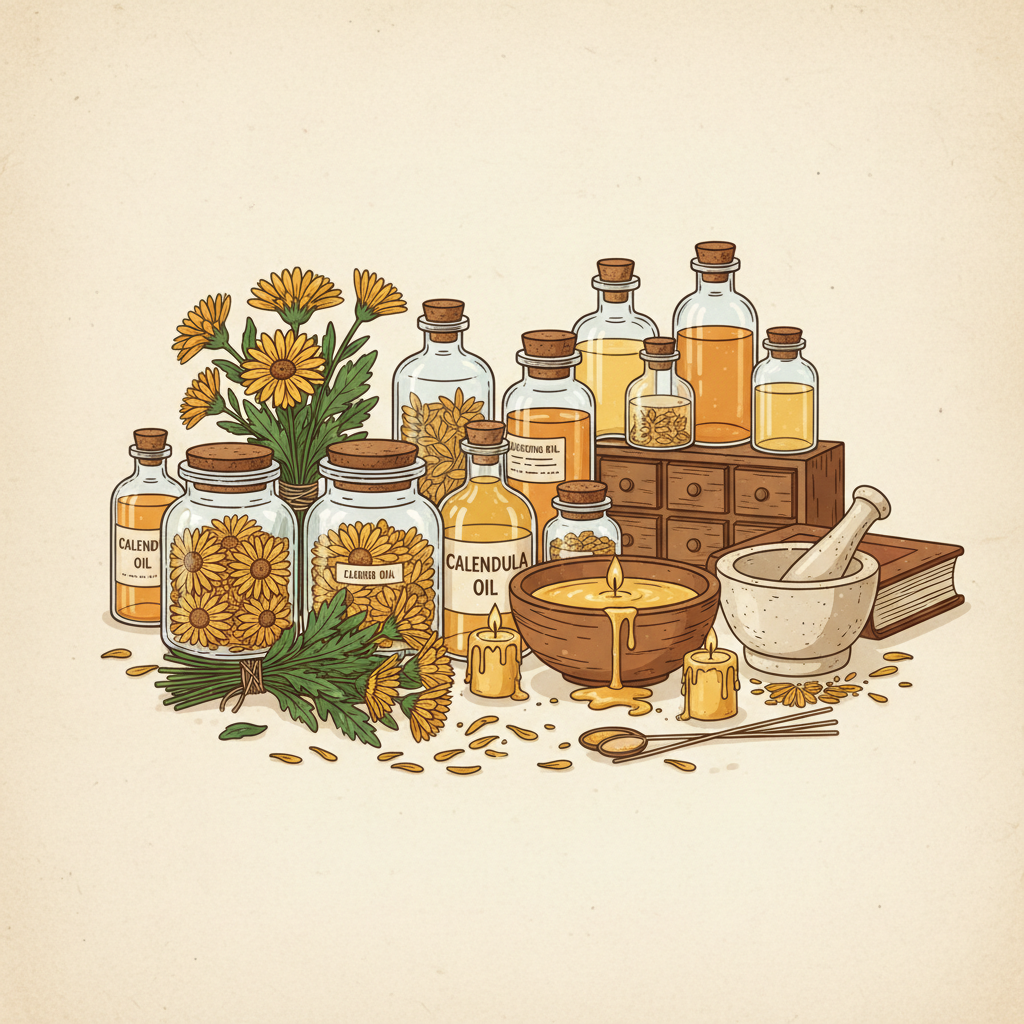
How to Make Calendula Oil Candles for Aromatherapy
The golden glow of calendula oil candles brings both visual warmth and a gentle, honey-like fragrance to any space. These DIY calendula aromatherapy candles offer a wonderful way to experience the traditional aromatic qualities of calendula while creating a soothing atmosphere in your home. The process of crafting these candles is both meditative and rewarding, allowing you to connect with this beloved botanical while creating something beautiful for your living space.
Calendula petals have been cherished for centuries, and incorporating calendula oil into candle-making extends this tradition in a delightful way. People often report that the soft, subtle scent may help promote a sense of calm and relaxation during evening routines or meditation practices. While we make no medical claims about these candles, many crafters find the process of making them just as enjoyable as using the finished product.
Understanding Calendula Oil in Candle Making
Before diving into the crafting process, it's important to understand how calendula oil behaves in candles. Unlike essential oils that are highly concentrated, calendula oil used in candle making is typically an infused oil—calendula petals steeped in a carrier oil like sunflower or olive oil. This creates a gentler fragrance that burns cleanly and evenly.
When selecting calendula oil for your candles, choose high-quality, pure calendula oil that's specifically labeled as suitable for cosmetic or aromatherapy use. The oil should have a golden color and a mild, pleasant aroma. For those interested in exploring broader calendula oil uses, candle making is just one of many traditional applications for this versatile botanical oil.
Essential Materials and Ingredients
Gathering the right materials is crucial for successful candle making. Here's your complete supply list:
Wax Base
- 2 pounds soy wax flakes (recommended for clean burning)
- Alternative: Beeswax (1.5 pounds) for a more natural option
- Alternative: Coconut wax (1.75 pounds) for excellent scent throw
Calendula Components
- 3-4 tablespoons pure calendula oil
- 2 tablespoons dried calendula petals (optional, for decoration)
Candle Making Supplies
- Cotton wicks (size depends on container diameter)
- Wick holders or pencils for centering
- Glass containers (mason jars, tea cups, or dedicated candle containers)
- Double boiler or makeshift version with heat-safe bowl
- Thermometer (candy or candle thermometer)
- Wooden stirring sticks
- Scissors for trimming wicks
Optional Enhancement Materials
- Natural colorant (small amount of turmeric for golden hue)
- Complementary essential oils (chamomile or lavender, 10-15 drops total)
- Labels for finished candles
Step-by-Step Candle Making Process
Step 1: Prepare Your Workspace
Set up your candle making station in a well-ventilated area away from drafts. Cover your work surface with newspaper or parchment paper to catch any wax drips. Ensure all your materials are within easy reach, as you'll need to work relatively quickly once the wax is melted.
Step 2: Prepare the Containers and Wicks
Clean your containers thoroughly and dry completely. Cut wicks to appropriate lengths—they should be about 1 inch longer than the height of your containers. Secure the metal base of each wick to the bottom center of your containers using a small drop of melted wax or wick sticker.
Use wick holders, pencils, or chopsticks to keep wicks centered and straight. The wick size is important: too small and your candle won't burn properly across the surface; too large and it will create excessive smoke and soot.
Step 3: Melt the Wax
Using your double boiler setup, heat water in the bottom pot to a gentle simmer. Place wax flakes in the top container and allow them to melt slowly, stirring occasionally. Monitor the temperature with your thermometer—soy wax should reach about 185°F (85°C) for proper melting.
Safety Note: Never leave melting wax unattended, and avoid overheating as this can create a fire hazard.
Step 4: Add Calendula Oil
Once your wax is completely melted and clear, remove it from heat. Allow the temperature to cool slightly to around 160°F (71°C) before adding your calendula oil. This prevents the oil from evaporating due to excessive heat.
Slowly stir in 3-4 tablespoons of calendula oil using wooden stirring sticks. Mix gently but thoroughly to ensure even distribution. The mixture should take on a subtle golden tint from the calendula oil.
Step 5: Optional Enhancements
If you're adding complementary scents, now is the time. A few drops of chamomile or lavender essential oil can create lovely aromatherapy blends. For those exploring various DIY calendula recipes, experimentation with scent combinations can be quite rewarding.
For natural coloring, add a pinch of turmeric to enhance the golden hue, but use sparingly as a little goes a long way.
Step 6: Pour the Candles
Allow the wax mixture to cool to approximately 140°F (60°C) before pouring. This temperature helps prevent sinkholes and ensures smooth tops. Pour slowly and steadily into your prepared containers, leaving about ½ inch of space at the top.
If you're adding dried calendula petals for decoration, sprinkle them on the surface immediately after pouring, or gently press them into the sides of the container before pouring for an embedded look.
Step 7: Setting and Cooling
Keep your candles undisturbed while they cool and set, typically 4-6 hours at room temperature. Avoid moving them to the refrigerator, as rapid cooling can cause cracking or separation.
Once completely set, trim wicks to ¼ inch above the wax surface for optimal burning.
Common Mistakes to Avoid
Temperature-Related Issues
Adding calendula oil when the wax is too hot will cause the fragrance to dissipate. Conversely, adding it when the wax is too cool can result in poor incorporation and uneven scent distribution. Always use a thermometer for best results.
Wick Problems
Using the wrong wick size is one of the most common candle making errors. Too large a wick creates excessive heat and potential safety hazards, while too small a wick results in poor burn performance and tunneling. Consult wick sizing charts based on your container diameter.
Overscenting
While it might seem logical to add more oil for stronger scent, calendula oil should be used in moderation. Excessive oil can interfere with proper burning and may cause smoking or poor wax pooling.
Decoration Pitfalls
If using dried calendula petals, avoid placing them too close to the wick, as they can become fire hazards. Keep decorative elements at least ½ inch away from the wick path.
Safety Considerations and Best Practices
Fire Safety: Always burn candles on stable, heat-resistant surfaces away from flammable materials. Never leave burning candles unattended, and extinguish them before leaving the room.
Patch Testing: Before extensive use, some individuals may want to test their sensitivity to calendula oil candles by burning them for short periods in well-ventilated areas.
Ventilation: Ensure adequate ventilation when burning any candles, especially in small spaces. This is particularly important for those who may be sensitive to botanical fragrances.
Storage: Store finished candles in cool, dry places away from direct sunlight to preserve their quality and prevent warping or color fading.
Enhancing Your Calendula Candle Experience
The gentle, honey-like fragrance of calendula oil candles makes them particularly suitable for evening relaxation routines. Many people find that the warm glow and subtle scent may help create a peaceful atmosphere for reading, meditation, or unwinding after a busy day.
Consider creating a collection of different-sized calendula candles for various uses—small votive candles for intimate settings, medium jar candles for everyday use, and larger pillar candles for special occasions. Each size offers different burning times and scent experiences.
For those interested in the broader world of calendula oil aromatherapy, these candles can complement other aromatic practices while adding visual beauty to your space.
Troubleshooting Your Calendula Candles
Weak Scent Throw
If your finished candles seem to have little fragrance when burning, this often indicates the calendula oil was added at too high a temperature, or insufficient oil was used. For future batches, ensure proper temperature control and consider slightly increasing the oil quantity within safe limits.
Uneven Burning
Tunneling or uneven wax pools usually indicate wick size issues or drafty burning conditions. Ensure wicks are properly sized for your containers and burn candles away from air currents.
Cracking or Separation
These issues typically result from temperature shock—cooling too rapidly or adding ingredients at improper temperatures. Allow gradual cooling at room temperature for best results.
Creative Variations and Gift Ideas
Once you've mastered basic calendula oil candles, consider creating themed collections. Combine calendula with complementary botanicals like chamomile for bedtime candles, or blend with citrus oils for uplifting daytime versions.
These handmade candles make thoughtful gifts for friends and family who appreciate natural, handcrafted items. Consider packaging them in attractive boxes with information about calendula's traditional uses and burning instructions.
For special occasions, create custom labels describing the traditional significance of calendula and the care that went into crafting each candle. This personal touch transforms a simple candle into a meaningful, artisanal gift.
Maintaining Your Candle Making Practice
As you develop your candle making skills, keep detailed notes about recipes, temperatures, and results. This documentation helps you refine your technique and recreate successful batches.
Store your candle making supplies properly—keep wicks in dry containers, store oils in cool, dark places, and ensure wax remains clean and contamination-free. Proper storage extends the life of your materials and improves your finished products.
Consider joining candle making communities or workshops to learn new techniques and connect with other crafters. The art of candle making has a rich tradition, and sharing experiences with fellow enthusiasts can enhance your skills and creativity.
Remember that candle making, like working with calendula oil itself, is both an art and a craft that improves with practice. Each batch offers opportunities to refine your technique and create increasingly beautiful and aromatic results that may help bring a sense of warmth and tranquility to your living space.