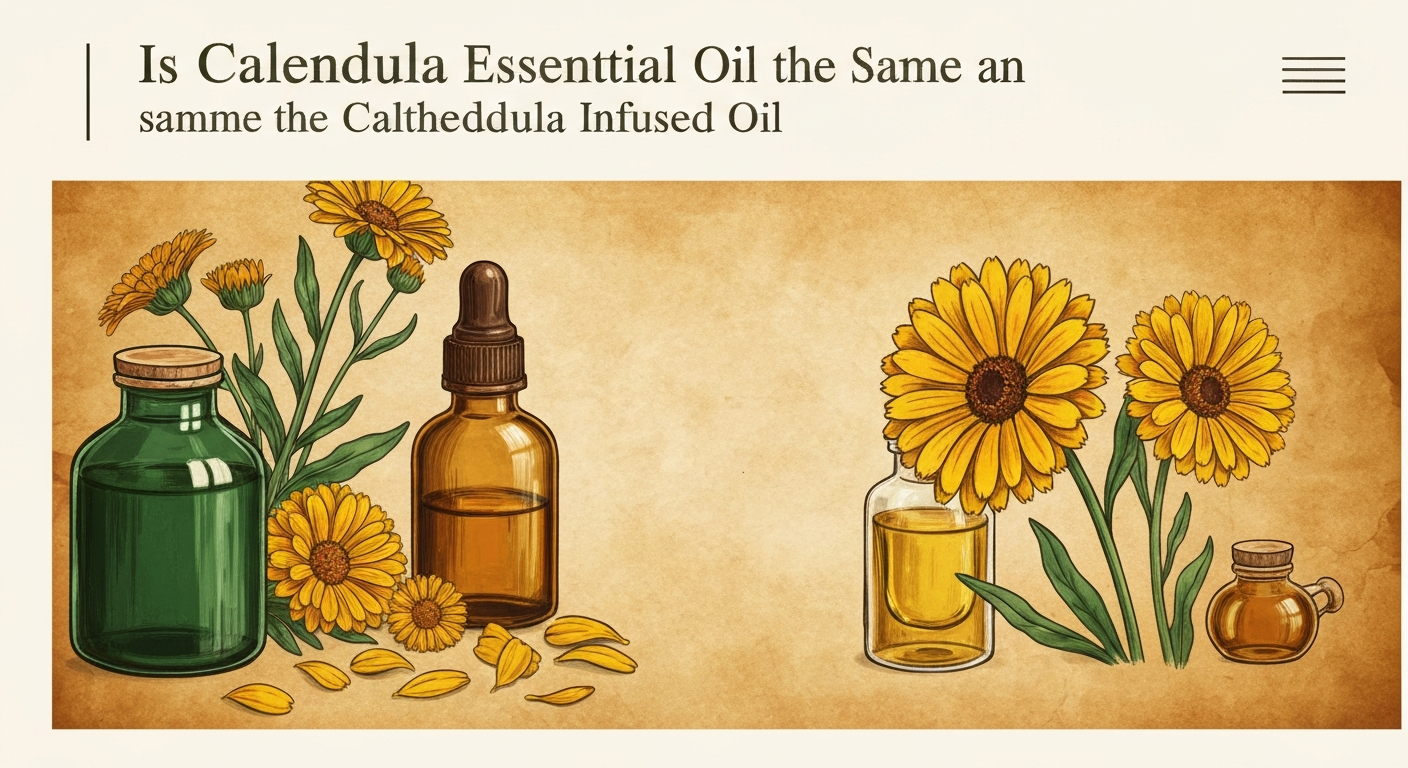
Is Calendula Essential Oil the Same as Calendula Infused Oil? Separating Fact from Fiction
In the world of natural botanicals, few topics generate more confusion than the difference between calendula essential oil and calendula infused oil. This widespread misconception has led countless consumers to purchase products they didn't intend to buy, expecting benefits that may not align with what they've actually received. Today, we're setting the record straight on this persistent myth that has clouded the calendula market for years.
Understanding these distinctions isn't merely academic—it affects everything from product selection to expected outcomes. Whether you're a seasoned herbalist or someone newly exploring natural wellness options, this comprehensive myth-busting guide will illuminate the fascinating world of calendula oil processing and help you make informed decisions about these golden botanical treasures.
The Great Calendula Oil Confusion: Why This Myth Persists
Before we dive into specific myths, it's important to understand why this confusion exists in the first place. The calendula industry has inadvertently contributed to this misunderstanding through inconsistent labeling practices and marketing terminology. Many products labeled as "calendula essential oil" are actually infused oils, while true essential oils from calendula are rarely found in commercial markets.
This labeling inconsistency has created a perfect storm of consumer confusion, compounded by the fact that both products offer valuable properties and applications. The result? A marketplace where even experienced users may not fully understand what they're purchasing.
Myth #1: "Calendula Essential Oil is Widely Available and Common"
The Myth
Many consumers believe that calendula essential oil is as readily available as other popular essential oils like lavender or tea tree, and that most products labeled as "calendula essential oil" contain true steam-distilled essence.
The Reality
Research suggests that true calendula essential oil is extremely rare and expensive to produce. Evidence indicates that calendula petals contain very low concentrations of volatile compounds, making traditional steam distillation economically impractical for most producers. When authentic calendula essential oil is produced, it typically requires enormous quantities of flowers—some sources suggest up to 500 pounds of fresh calendula petals to produce just one ounce of essential oil.
Why This Myth Exists
This misconception persists because many products are mislabeled or use confusing terminology. What most consumers encounter and purchase as "calendula essential oil" is actually calendula infused oil—a completely different product created through a different process entirely. The widespread availability of infused oils has led many to assume that essential oils are equally common.
Myth #2: "The Extraction Methods Are the Same"
The Myth
Another persistent belief is that both calendula essential oil and infused oil are created through similar processes, just with slight variations in technique.
The Reality
The truth about calendula oil extraction reveals dramatically different processes. True essential oil extraction typically involves steam distillation or CO2 extraction, where volatile compounds are separated from plant material through heat and pressure. This process captures the aromatic molecules that give plants their distinctive scents.
In contrast, calendula infused oil is created through a much gentler process involving either:
- Solar infusion: Fresh or dried calendula petals are submerged in carrier oil and left in sunlight for several weeks
- Heat infusion: Calendula petals are gently warmed in carrier oil at low temperatures
- Cold infusion: A longer process where petals macerate in oil at room temperature
These infusion methods extract different compounds entirely—primarily oil-soluble constituents rather than volatile aromatic molecules. Evidence indicates that this process may capture compounds like flavonoids and carotenoids that give calendula its characteristic golden color.
Why This Myth Exists
The confusion stems from the fact that both processes start with calendula flowers and end with an oil product. However, the similarity ends there. The different extraction methods capture entirely different sets of plant compounds, resulting in products with different characteristics, applications, and properties.
Myth #3: "They Have Identical Properties and Applications"
The Myth
Many consumers assume that since both products come from the same plant, they offer identical benefits and can be used interchangeably in any application.
The Reality
Research suggests that the two products have notably different characteristics. True calendula essential oil, when available, would be highly concentrated and typically requires significant dilution before use. It would primarily contain volatile aromatic compounds and would have a potent, concentrated scent.
Calendula infused oil, on the other hand, evidence indicates contains different plant constituents dissolved in a carrier oil base. This product is generally ready to use without further dilution and has a mild, subtle aroma. Some research suggests that the infusion process may capture compounds that aren't present in steam distillation.
Traditional herbal practices have historically favored infused calendula oils, and anecdotal evidence suggests that many users prefer the gentler nature of infused oils for topical applications. People report that infused oils feel more nourishing and less intense than concentrated essential oils.
Why This Myth Exists
This misconception arises from the natural assumption that products from the same source plant would be identical. Additionally, marketing materials often emphasize the plant source rather than the extraction method, leading consumers to focus on the calendula rather than the processing differences.
Myth #4: "Price Differences Are Just Marketing Markup"
The Myth
Some consumers believe that significant price differences between products labeled as calendula essential oil and infused oil are simply due to marketing tactics or brand positioning.
The Reality
Evidence indicates that authentic calendula essential oil commands premium prices due to the enormous quantity of plant material required and the specialized equipment needed for extraction. When genuine calendula essential oil is available, it can cost 10-20 times more than high-quality infused oil.
Conversely, if you encounter a product labeled as "calendula essential oil" at a price similar to infused oils, research suggests it's likely mislabeled infused oil. True essential oil production costs would make such pricing economically impossible for most producers.
Why This Myth Exists
This myth persists because many consumers haven't encountered genuine calendula essential oil pricing. The prevalence of mislabeled infused oils sold as "essential oils" has created artificial price expectations that don't reflect the true costs of essential oil production.
Myth #5: "Color and Consistency Are Identical"
The Myth
Another common misconception is that calendula essential oil and infused oil look and feel the same, making visual identification impossible.
The Reality
Research suggests that true calendula essential oil would likely be pale or colorless, similar to other steam-distilled essential oils. The golden color associated with calendula comes from carotenoids and other pigments that are oil-soluble rather than steam-distillable.
Calendula infused oil, evidence indicates, displays the characteristic golden to deep amber coloration because the infusion process extracts these pigments along with other oil-soluble compounds. The consistency also differs—essential oils are typically thin and volatile, while infused oils have the consistency of their carrier oil base.
Why This Myth Exists
This confusion exists because most people have only encountered infused oils labeled as essential oils. The golden color of infused oils has become so associated with "calendula oil" that many assume all calendula products should have this appearance.
Understanding the Practical Implications
These distinctions matter beyond mere academic interest. Understanding which type of calendula oil you're purchasing affects:
Usage Guidelines
True essential oils generally require dilution and careful handling, while infused oils can often be used directly. Some research suggests that essential oils may be more suitable for aromatherapy applications, while infused oils are traditionally preferred for topical use.
Storage Requirements
Essential oils typically have different storage needs than infused oils. Evidence indicates that essential oils are more volatile and may require tighter sealing and cooler storage, while infused oils follow standard carrier oil storage guidelines.
Expected Shelf Life
The shelf life differs significantly between the two products. Research suggests that properly stored essential oils can maintain potency for years, while infused oils typically follow the shelf life patterns of their carrier oil base.
Making Informed Purchasing Decisions
To avoid falling victim to these myths, consider these guidelines when shopping for calendula products:
Read Labels Carefully
Look for specific terminology. Products that list ingredients like "Calendula officinalis flower extract in sunflower oil" are clearly infused oils. True essential oils would typically list only "Calendula officinalis" or specify the extraction method.
Consider the Price Point
If a product labeled as calendula essential oil is priced similarly to other infused oils, it's likely mislabeled. Authentic essential oils command premium prices due to production costs.
Examine Physical Characteristics
Golden coloration typically indicates an infused oil, while true essential oils are usually pale or colorless.
The Bottom Line: Embracing Clarity in Calendula
The persistent confusion between calendula essential oil and infused oil has created unnecessary complexity in what should be a straightforward botanical category. By understanding these key distinctions, consumers can make informed decisions that align with their specific needs and expectations.
Both products have their place in natural wellness routines, but they serve different purposes and offer different experiences. Rather than viewing this as a limitation, we can appreciate the diverse ways that calendula's botanical wisdom can be captured and shared.
Whether you choose the rare intensity of true essential oil or the gentle nourishment of infused oil, understanding what you're actually purchasing empowers you to use these botanical treasures safely and effectively. The next time you encounter calendula oil products, you'll have the knowledge to see through marketing myths and select the option that truly meets your needs.
Always consult with a qualified healthcare provider before using any botanical products, especially if you have specific health concerns or are taking medications.