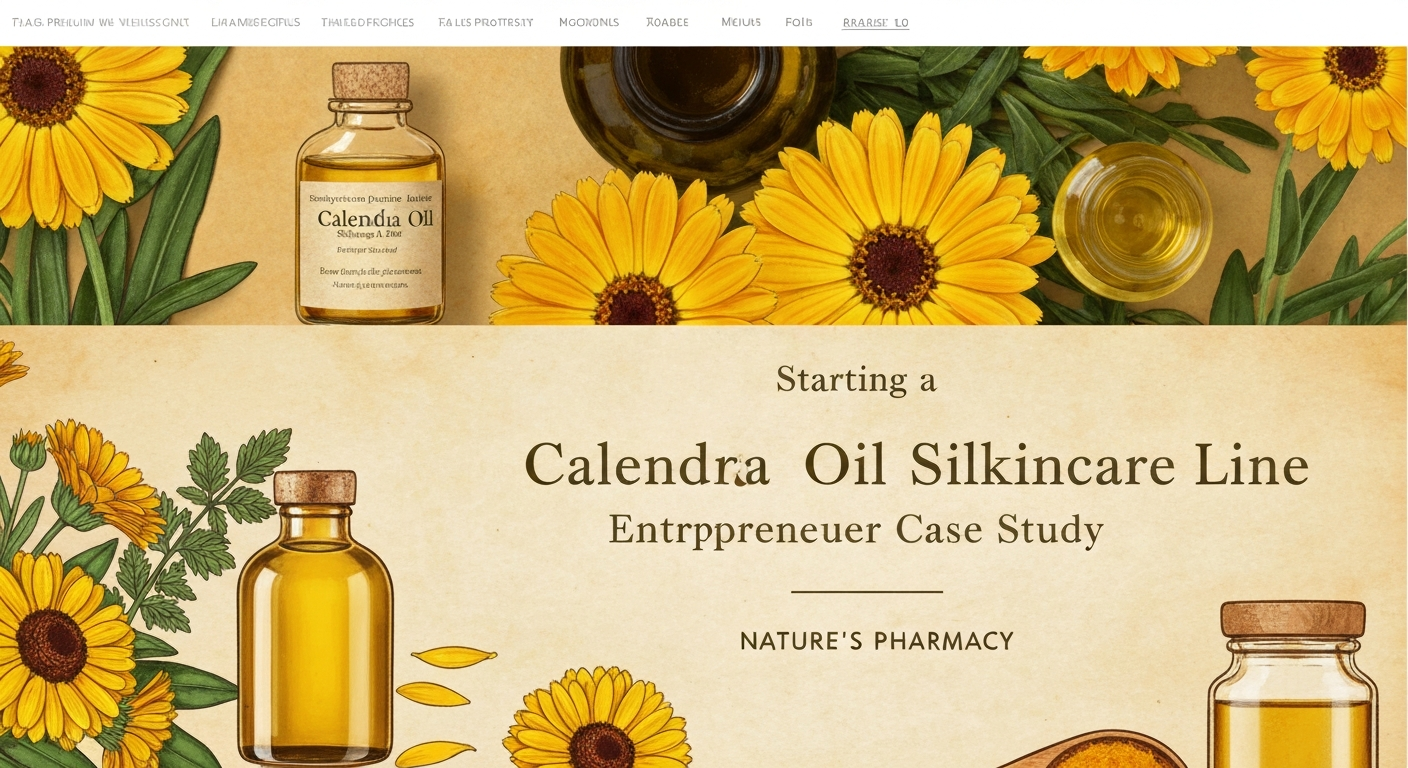
Starting a Calendula Oil Skincare Line: Entrepreneur Case Study
The natural skincare market has experienced remarkable growth in recent years, with consumers increasingly seeking botanical ingredients they recognize and trust. For Sarah Chen, a former marketing executive turned entrepreneur, calendula oil represented the perfect intersection of consumer demand and botanical tradition. This case study examines her journey from concept to launch, offering insights for aspiring entrepreneurs interested in starting a calendula oil business.
The Challenge: Identifying Market Opportunity
Sarah's entrepreneurial journey began with a personal challenge. After years of using conventional skincare products that left her skin feeling sensitive, she discovered calendula oil through a local herbalist. Intrigued by calendula's long history of traditional use in skincare applications, she began researching the market potential for calendula skincare products.
Market Research Findings
Her initial market research revealed several key insights:
- Growing consumer preference for recognizable botanical ingredients
- Increasing demand for gentle, traditional skincare solutions
- Limited premium calendula oil products in mainstream retail channels
- Strong interest from consumers with sensitive skin seeking gentle alternatives
- Educational gap about calendula oil's traditional uses and benefits
"I noticed that while calendula was well-known in herbal circles, there was a real opportunity to introduce it to mainstream consumers who were already interested in natural skincare," Sarah explains. "The challenge was creating products that would meet both quality expectations and regulatory requirements."
The Approach: Building from the Ground Up
Rather than rushing to market, Sarah spent nearly eighteen months in the planning and development phase. Her methodical approach involved several key components:
1. Understanding Regulatory Requirements
Early in her research, Sarah recognized the importance of understanding FDA regulations for cosmetic products. She consulted with a cosmetic chemist and regulatory specialist to ensure her product development would comply with all applicable guidelines.
"One of my biggest learnings was that you can't make health claims about cosmetic products," she notes. "Everything had to be framed in terms of traditional use and customer experience, not medical benefits."
2. Sourcing High-Quality Calendula Oil
The foundation of Sarah's business model was built on sourcing exceptional organic calendula oil. She spent months evaluating suppliers, visiting farms, and understanding the extraction process.
"I quickly learned that not all calendula oil is created equal. Factors like growing conditions, harvest timing, and extraction methods all impact the final product quality."
Her sourcing criteria included:
- Certified organic cultivation methods
- CO2 or cold-pressed extraction processes
- Third-party testing for purity and quality
- Transparent supply chain documentation
- Sustainable farming practices
3. Product Formulation Strategy
Working with an experienced cosmetic chemist, Sarah developed a focused product line that showcased calendula oil products in various formulations:
| Product | Calendula Oil % | Key Features |
|---|---|---|
| Pure Calendula Oil | 100% | Single-ingredient, versatile use |
| Gentle Cleansing Oil | 25% | Calendula with jojoba and sweet almond |
| Nourishing Face Balm | 15% | Calendula with shea butter and beeswax |
| Body Moisturizer | 10% | Calendula with coconut and sunflower oils |
"We wanted each product to showcase calendula oil in a different way," Sarah explains. "The pure oil appeals to minimalists, while the formulated products offer convenience for different skincare routines."
4. Brand Development and Positioning
Sarah positioned her brand around the concept of "botanical heritage meets modern quality." The brand story emphasized:
- Traditional use of calendula in skincare
- Commitment to quality sourcing and testing
- Educational approach to ingredient benefits
- Transparency in formulation and sourcing
- Sustainable business practices
Implementation: From Concept to Market
Phase 1: Product Development (Months 1-12)
The first year focused entirely on product development and regulatory compliance. Sarah's approach included:
- Formulation testing with multiple calendula oil sources
- Stability testing to ensure product shelf life
- Packaging selection and compatibility testing
- Label compliance review with regulatory consultant
- Initial batch production and quality control protocols
"This phase taught me patience," Sarah reflects. "Every adjustment to the formulation required new stability testing. It was tempting to rush, but quality had to come first."
Phase 2: Market Testing (Months 13-18)
Before full launch, Sarah conducted limited market testing through:
- Local farmers market sales to gather direct customer feedback
- Small batch production for friends and family testing
- Online survey to gauge packaging and pricing preferences
- Retailer feedback sessions at regional trade shows
The feedback revealed important insights about calendula oil quality expectations:
"Customers could definitely tell the difference between high-quality calendula oil and lower-grade alternatives. They appreciated the golden color and gentle scent of our premium oil."
Phase 3: Launch Strategy (Months 19-24)
Sarah's launch strategy focused on education and relationship building rather than aggressive marketing:
- Content marketing emphasizing traditional uses of calendula
- Partnership with local spas and wellness centers
- Participation in natural products trade shows
- Social media education about botanical skincare ingredients
- Customer testimonial collection (focusing on experience, not medical claims)
Observations and Outcomes
Financial Performance
After two years in business, Sarah's calendula skincare brand achieved several milestones:
- Break-even point reached at 18 months
- Revenue growth of 150% between year one and year two
- Product line expansion from 4 to 8 SKUs
- Retail presence in 45 independent stores across three states
- Direct-to-consumer sales representing 60% of total revenue
"The financial results exceeded my initial projections, but more importantly, we built a sustainable business model," Sarah notes.
Customer Response and Market Reception
Customer feedback highlighted several recurring themes:
- Appreciation for product quality and ingredient transparency
- Interest in learning about traditional uses of calendula
- Positive experiences with gentle, non-irritating formulations
- Value perception aligned with premium positioning
- Request for additional product formats and concentrations
"Our customers became our best educators," Sarah observes. "They would share their experiences with friends and family, which drove organic growth better than any advertising campaign."
Operational Insights
The business model revealed several operational considerations specific to calendula oil products:
- Seasonal sourcing challenges: Calendula harvest timing affects oil availability and pricing
- Quality control complexity: Natural variations in botanical ingredients require consistent testing
- Educational marketing needs: Customers needed information about traditional uses and proper application
- Regulatory compliance: Ongoing attention required for label claims and product positioning
- Inventory management: Balancing freshness with stock availability for natural products
Key Learnings and Recommendations
1. Quality Is Non-Negotiable
Sarah's experience reinforced that quality cannot be compromised, especially in the natural products market. "Customers who choose botanical skincare ingredients often have heightened sensitivity to quality differences. They can tell when you've cut corners."
2. Regulatory Knowledge Is Essential
Understanding FDA regulations from the beginning prevented costly reformulations and label changes later. "Investing in regulatory consultation early saved significant time and money down the road."
3. Education Drives Sales
Rather than making health claims, Sarah found success in educating customers about calendula's traditional uses and her sourcing standards. "When customers understand the 'why' behind your products, they become invested in your brand story."
4. Supply Chain Relationships Matter
Building strong relationships with calendula oil suppliers provided stability and quality assurance. "Your suppliers are partners in your brand promise. Choose them carefully and maintain those relationships."
5. Start Small, Think Big
Beginning with a focused product line allowed for quality control and market learning before expansion. "We could have launched with twelve products, but starting with four let us perfect our processes and understand our customers."
Challenges and Solutions
Supply Chain Stability
Challenge: Seasonal availability and quality variations in calendula oil supply.
Solution: Developed relationships with multiple certified organic suppliers across different growing regions, creating supply chain redundancy while maintaining quality standards.
Customer Education
Challenge: Limited consumer awareness of calendula oil benefits and traditional uses.
Solution: Created comprehensive educational content focusing on historical uses, traditional applications, and ingredient sourcing stories rather than health claims.
Competitive Differentiation
Challenge: Standing out in an increasingly crowded natural skincare market.
Solution: Focused on transparency, quality documentation, and educational approach rather than competing solely on price or marketing claims.
Future Outlook and Expansion Plans
Looking ahead, Sarah plans strategic expansion based on customer feedback and market opportunities:
- Development of calendula oil products for specific skin concerns
- Expansion into complementary botanical oils
- Direct partnerships with organic calendula farmers
- Educational workshop offerings for customers and retailers
- Sustainable packaging initiatives to align with brand values
"The goal isn't just to grow the business, but to continue elevating the perception and understanding of traditional botanical ingredients like calendula oil," Sarah explains.
Practical Takeaways for Aspiring Entrepreneurs
For entrepreneurs considering a calendula oil business, Sarah offers these practical recommendations:
Before You Start
- Understand FDA regulations for cosmetic products
- Research calendula oil sourcing and quality standards
- Identify your target market and their specific needs
- Develop relationships with potential suppliers
- Consider working with experienced cosmetic chemists
During Development
- Prioritize quality over quick market entry
- Document all processes for consistency and compliance
- Test products extensively before launch
- Gather customer feedback early and often
- Build educational content around your ingredients
At Launch and Beyond
- Focus on customer education rather than health claims
- Maintain consistent quality standards as you scale
- Monitor regulatory changes affecting your products
- Nurture supplier relationships for long-term stability
- Stay connected to customer needs and market trends
Conclusion: Building a Sustainable Calendula Oil Business
Sarah's journey from concept to successful starting calendula skincare brand demonstrates that success in the natural products industry requires patience, quality focus, and deep respect for regulatory requirements. Her experience shows that consumers are willing to invest in premium botanical products when they understand the sourcing story and traditional heritage behind ingredients like calendula oil.
The case study reveals that building a calendula oil business is less about making bold claims and more about creating genuine value through quality, transparency, and education. For entrepreneurs drawn to the natural skincare market, calendula oil offers a compelling foundation for building a business that honors both traditional botanical wisdom and modern quality standards.
"Starting this business taught me that success comes from respecting both your ingredients and your customers," Sarah reflects. "When you do that, growth follows naturally."
Important Note: This case study is for educational purposes only. Anyone considering starting a cosmetic or skincare business should consult with qualified regulatory specialists, cosmetic chemists, and business advisors to ensure compliance with all applicable laws and regulations. No health claims are made or implied about calendula oil or any products mentioned.