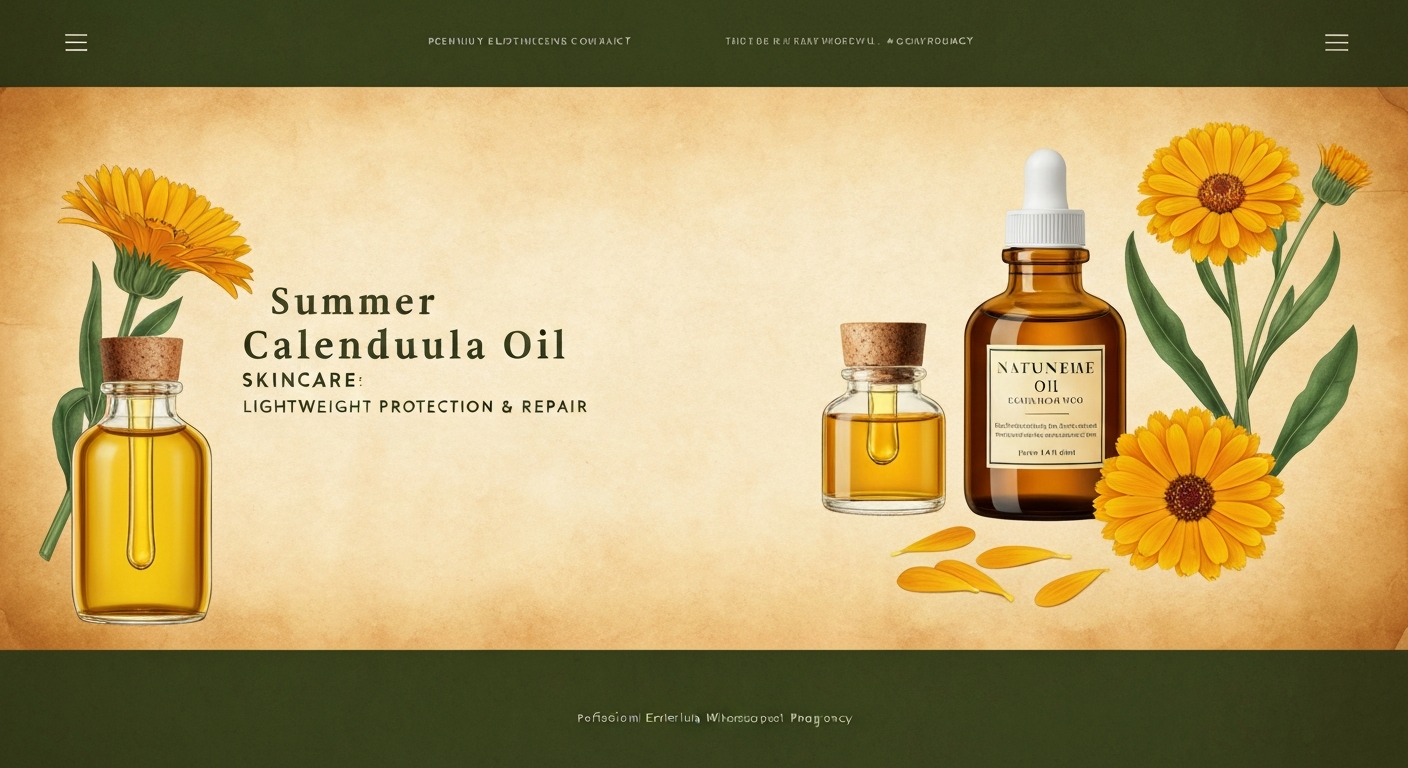
Summer Calendula Oil Skincare: Lightweight Protection & Repair
As temperatures rise and outdoor activities beckon, summer brings unique challenges for our skin. The combination of intense UV rays, increased humidity, chlorinated pools, and salty ocean air can leave skin feeling stressed and in need of gentle support. This season, many skincare enthusiasts are turning to calendula oil—nature's golden healer—for its traditionally gentle properties that may help support skin comfort during the demanding summer months.
Calendula oil, extracted from the vibrant marigold flower (Calendula officinalis), has been treasured for centuries in folk traditions around the world. Unlike heavy, occlusive oils that can feel uncomfortable in hot weather, quality calendula oil offers a surprisingly lightweight feel while potentially providing the nourishing support summer skin craves.
Why Calendula Oil Shines in Summer Skincare
Summer skin faces a perfect storm of environmental stressors. The sun's UV rays, while wonderful for vitamin D synthesis, can be harsh on delicate skin tissue. Pool chemicals strip away natural oils, while air conditioning creates dry indoor environments that contrast sharply with humid outdoor conditions. Ocean salt, while mineral-rich, can be drying. Even increased sweating can disrupt the skin's natural balance.
Calendula oil may offer several properties that make it particularly well-suited for summer skin support:
- Lightweight texture: Unlike heavier oils, calendula oil absorbs relatively well and doesn't leave a greasy residue that can attract dirt and sweat
- Traditional cooling properties: Folk traditions suggest calendula may help promote a sense of comfort on warm skin
- Gentle nature: Suitable for most skin types, including sensitive skin that may be more reactive in summer heat
- Versatile application: Can be used on face, body, and even incorporated into after-sun care routines
Creating Your Summer Calendula Oil Routine
Adapting your skincare routine for summer doesn't mean completely overhauling your regimen. Instead, consider how calendula oil can complement your existing routine while addressing seasonal concerns.
Morning Application: Lightweight Pre-Sun Protection
While calendula oil should never replace proper SPF protection, it may serve as a nourishing base layer in your morning routine. Some people report that applying a few drops of calendula oil before sunscreen helps create a smooth application surface and may support skin comfort throughout the day.
Morning Routine Suggestion:
- Gentle cleanse with cool water
- Apply 2-3 drops of calendula oil while skin is slightly damp
- Allow to absorb for 2-3 minutes
- Apply your regular broad-spectrum SPF 30+ sunscreen
- Continue with makeup or other products as usual
Important Safety Note: Calendula oil does not provide sun protection. Always use appropriate SPF sunscreen and practice sun-safe behaviors including seeking shade and wearing protective clothing.
Midday Refresh: Cooling Mist Blend
For those long summer days when your skin needs a midday pick-me-up, consider creating a calendula-infused facial mist. This can be particularly refreshing after outdoor activities or before reapplying sunscreen.
DIY Calendula Summer Mist Recipe:
- 4 oz distilled water
- 1 tablespoon witch hazel
- 3-4 drops calendula oil
- 2 drops peppermint essential oil (optional, for cooling sensation)
Safety reminder: Always patch test new blends on a small area of skin first. Essential oils can increase photosensitivity, so avoid sun exposure after application. Store in refrigerator for extra cooling effect and use within one month.
Evening Repair: After-Sun Calendula Care

Even with diligent sun protection, summer evenings often call for extra skin support. This is where calendula oil traditionally shines, as many people report it helps promote a sense of comfort on sun-warmed skin.
Your evening routine might include gentle cleansing followed by calendula oil application to areas that received sun exposure. For comprehensive information about using calendula oil for sun-exposed skin, explore our detailed guide on calendula oil for sunburn support.
Full-Body Summer Care
Summer skincare extends beyond facial care. Consider these ways to incorporate calendula oil into your full-body routine:
- Post-shower application: Apply to damp skin to lock in moisture without heaviness
- Foot care: Summer sandals can lead to dry, rough feet—calendula oil may help support skin softness
- Décolletage care: This often-neglected area gets significant sun exposure and may benefit from gentle calendula oil care
- Hand support: Frequent hand washing and sanitizing can be drying—a drop of calendula oil may help maintain comfort
Calendula Oil for Different Summer Skin Types
One of calendula oil's appealing qualities is its generally gentle nature, making it potentially suitable for various skin types during summer's challenges.
Oily and Combination Skin
Contrary to common belief, oily skin can benefit from the right oils, even in summer. Calendula oil's lightweight nature means it's less likely to clog pores than heavier alternatives. Some people with oily skin report that using a few drops of calendula oil actually helps balance their skin's oil production over time.
For oily summer skin, consider:
- Using calendula oil sparingly—1-2 drops may be sufficient
- Applying to slightly damp skin for better absorption
- Focusing on areas that tend to get dry despite overall oiliness
Dry and Mature Skin
Air conditioning, sun exposure, and pool chemicals can exacerbate dryness in already dry skin types. Calendula oil may provide the nourishment these skin types crave without the heavy feeling that can be uncomfortable in heat.
For comprehensive facial care with calendula oil, including specific techniques for different skin types, visit our guide on calendula oil for face care.
Sensitive Skin
Summer heat can increase skin sensitivity, making gentle products even more important. Calendula oil's traditionally mild nature makes it a popular choice for those with reactive skin. However, as with any new product, patch testing remains essential.
Swimming Pool and Ocean Recovery
Summer often means more time in water—whether chlorinated pools or salt water oceans. Both can strip skin of its natural moisture and leave it feeling tight and uncomfortable.
Post-swimming skin care with calendula oil might include:
- Immediate rinse: Always shower with fresh water after swimming to remove chlorine or salt
- Gentle cleansing: Use a mild, non-stripping cleanser
- Damp skin application: Apply calendula oil while skin is still slightly damp to maximize absorption
- Focus areas: Pay special attention to areas prone to dryness like elbows, knees, and heels
Travel-Friendly Summer Skincare
Summer often brings travel, and calendula oil's versatility makes it an excellent addition to streamlined travel skincare routines. A single bottle can potentially serve multiple purposes:
- Facial moisturizer
- Body oil for dry patches
- Cuticle softener
- Hair treatment for sun-dried ends
- Makeup remover in a pinch
For air travel, transfer calendula oil to a TSA-compliant container and keep it in your carry-on for mid-flight skin hydration.
Choosing Quality Calendula Oil for Summer

Not all calendula oils are created equal, and summer's demands make quality even more important. When selecting calendula oil for your summer routine, consider:
- Extraction method: Look for oils extracted through gentle methods that preserve beneficial compounds
- Carrier oil base: Lighter carrier oils like sunflower or grapeseed may be more suitable for summer than heavier bases
- Storage: Proper storage becomes crucial in summer heat—keep oils in cool, dark places
- Freshness: Use oils within their recommended timeframe, as summer heat can accelerate rancidity
Safety Considerations for Summer Use
While calendula oil is generally well-tolerated, summer use requires some additional considerations:
- Photosensitivity: Though rare with pure calendula oil, always patch test and observe how your skin reacts to sun exposure after application
- Heat storage: Store oils in cool places; car glove compartments and sunny windowsills can degrade oil quality
- Hygiene: Summer's increased sweating makes clean application even more important—always use clean hands or tools
- Individual reactions: Heat can sometimes increase skin sensitivity, so monitor your skin's response
Complementary Summer Practices
Calendula oil works best as part of a holistic approach to summer skin health:
- Hydration: Increase water intake to support skin hydration from within
- Sun protection: Always use appropriate SPF and seek shade during peak hours
- Gentle cleansing: Avoid harsh scrubs or over-cleansing, which can compromise skin barrier function
- Cool environments: Take breaks from heat and sun to allow skin to recover
For specific guidance on post-sun skin support, including detailed application techniques, explore our comprehensive resource on calendula oil for after-sun care.
Making the Most of Summer with Calendula
Summer skincare doesn't have to be complicated or heavy-handed. Calendula oil offers a gentle, versatile approach that may help support your skin through the season's unique challenges. Whether you're lounging by the pool, hiking mountain trails, or simply navigating daily life in the heat, this golden oil can be a valuable addition to your skincare toolkit.
Remember, consistency is key with any skincare routine. Start slowly, observe how your skin responds, and adjust your routine as needed. While calendula oil may offer supportive properties, it should complement—not replace—essential summer skin practices like proper sun protection and hydration.
As you embrace the joys of summer, let calendula oil help you maintain comfortable, well-supported skin that's ready for whatever adventures the season brings. With its lightweight feel, traditional gentle properties, and versatile applications, calendula oil truly embodies the perfect companion for summer skincare—offering the nourishment your skin needs without the heaviness it doesn't want.
Disclaimer: This article is for educational purposes only and does not constitute medical advice. Individual results may vary, and those with specific skin conditions should consult with qualified healthcare providers or dermatologists before making significant changes to their skincare routines.