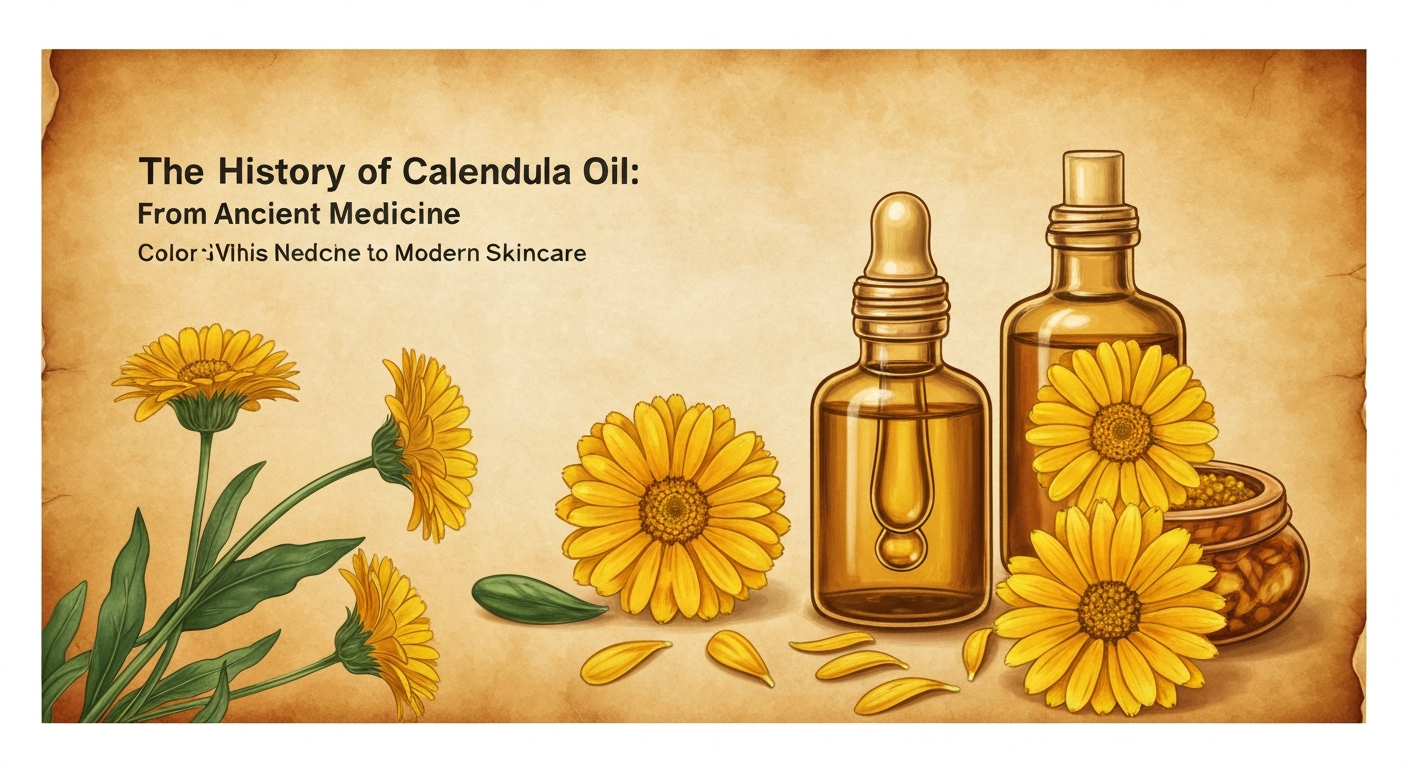
The History of Calendula Oil: From Ancient Medicine to Modern Skincare
Key Takeaways
- Calendula officinalis has been cultivated and valued for over 4,000 years across multiple civilizations
- Ancient Egyptians, Greeks, and Romans traditionally used calendula for various purposes
- Medieval monasteries preserved and expanded calendula knowledge through manuscript traditions
- The Renaissance period saw the first detailed botanical studies of calendula properties
- Modern research has helped us understand the botanical compounds that make calendula oil valued today
- Contemporary extraction methods have evolved to preserve more of calendula's natural constituents
- Today's skincare industry draws from thousands of years of traditional calendula use
Table of Contents
- Ancient Origins: The Dawn of Calendula Use
- Classical Civilizations and Calendula Traditions
- Medieval Preservation of Botanical Knowledge
- Renaissance Botanical Studies and Documentation
- Modern Extraction Methods and Scientific Understanding
- Contemporary Applications in Skincare and Wellness
- The Future: Sustainability and Innovation
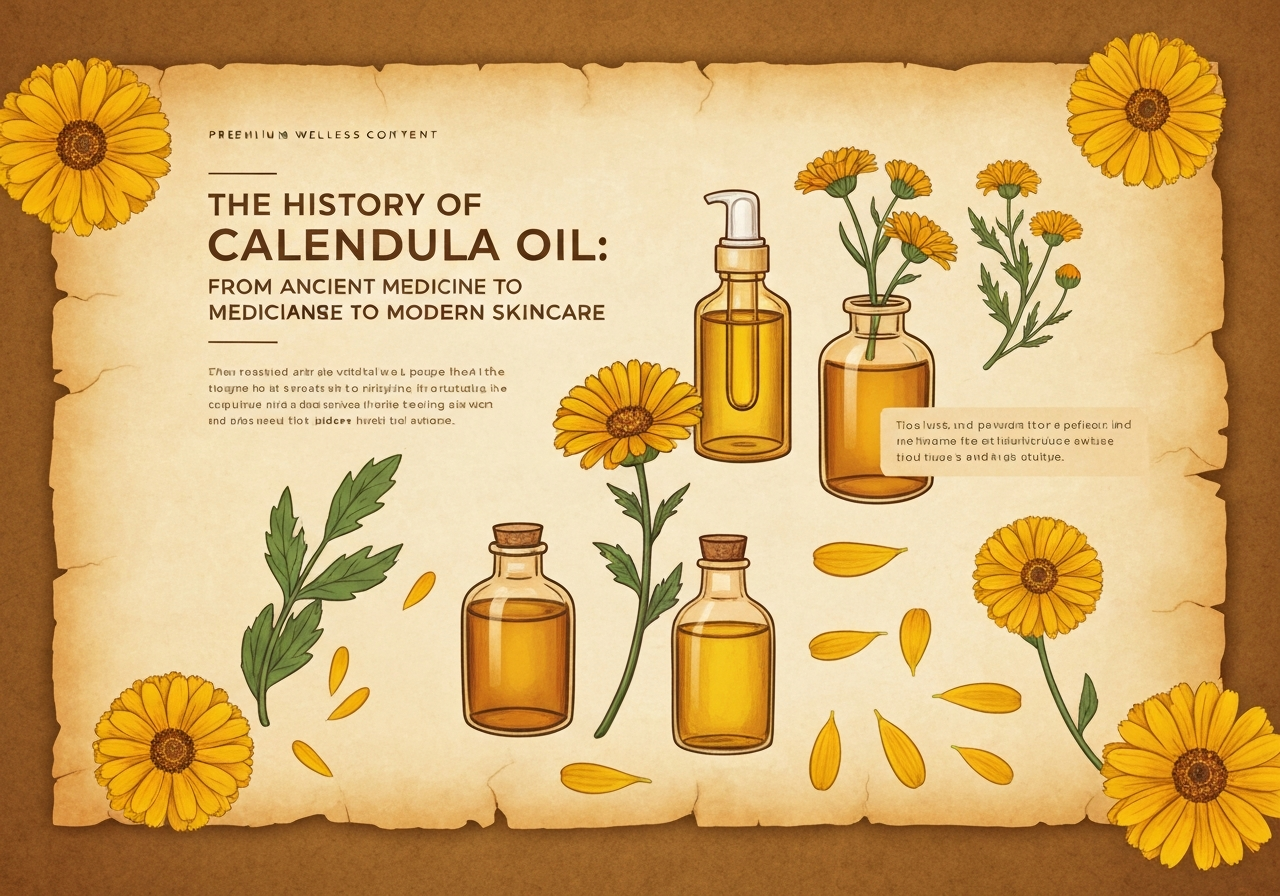
Ancient Origins: The Dawn of Calendula Use
The story of calendula oil history begins in the mists of antiquity, where vibrant golden-orange blooms first caught the attention of early civilizations. Archaeological evidence suggests that Calendula officinalis was among the earliest flowers cultivated by humans, with traces found in settlements dating back over 4,000 years.
The name "calendula" itself derives from the Latin "calendae," referring to the first day of each month in the Roman calendar. This etymology reflects the flower's remarkable ability to bloom almost continuously throughout the growing season, a characteristic that didn't go unnoticed by ancient observers who saw symbolic significance in its persistent flowering.
Mesopotamian and Early Agricultural Societies
Some of the earliest recorded use of calendula comes from Mesopotamian cuneiform tablets, where scribes documented the cultivation of "golden flowers" in temple gardens. These early agricultural societies recognized that certain plants held special properties, and calendula was among those selected for systematic cultivation rather than wild harvesting alone.
The transition from wild collection to deliberate cultivation marked a significant moment in calendula's history. Early farmers noticed that plants grown in well-tended soil produced more abundant and potent flowers, laying the groundwork for the selective breeding that would eventually give us the robust varieties we know today.
Egyptian Preservation Techniques
Ancient Egyptians developed sophisticated methods for preserving calendula's golden petals, techniques that would influence oil-making processes for millennia to come. Egyptian papyri describe elaborate procedures involving the careful drying of petals and their infusion in various carrier oils, particularly sesame and olive oil.
The Edwin Smith Papyrus, dating to approximately 1600 BCE, contains references to "golden flower oil" preparations that modern scholars believe included calendula. These ancient texts reveal that Egyptians understood the importance of timing in harvest—picking flowers at dawn when dew had evaporated but before the heat of midday could diminish the petals' potency.
Classical Civilizations and Calendula Traditions
The classical period witnessed an explosion of knowledge about calendula traditional medicine, as Greek and Roman scholars began systematic documentation of plant properties and usage patterns. This era established many of the foundational concepts that continue to influence how we understand calendula today.
Greek Botanical Knowledge
Greek physicians and philosophers, particularly those following the teachings of Hippocrates, developed comprehensive theories about plant energetics that included detailed observations of calendula. Theophrastus, often called the "Father of Botany," wrote extensively about calendula cultivation in his work "Enquiry into Plants" (circa 300 BCE).
The Greeks were particularly interested in what they called the "doctrine of signatures"—the belief that a plant's appearance provided clues to its traditional uses. Calendula's sun-like appearance and golden color led to associations with solar energy and vitality, concepts that influenced its traditional applications for centuries.
Greek texts describe elaborate rituals surrounding calendula harvest, including specific lunar timing and ceremonial preparations. These practices, while seemingly mystical to modern eyes, often contained practical wisdom about optimal harvesting conditions that maximized the flowers' desirable qualities.
Roman Agricultural Innovation
The Romans transformed calendula from a sacred garden plant into a commercial crop. Pliny the Elder's "Natural History" (77-79 CE) contains detailed descriptions of calendula cultivation techniques, including soil preparation, companion planting, and harvest scheduling that remained influential well into the medieval period.
Roman innovations in oil extraction technology significantly advanced the production of calendula oil. They developed improved pressing techniques and discovered that gentle heat could enhance oil extraction without damaging delicate plant compounds. These methods represented the first systematic approach to what we now understand as calendula oil processing.
The Roman military's interest in portable, shelf-stable preparations led to the development of calendula-infused salves and ointments that could withstand long campaigns. Military medical texts from this period provide detailed recipes for "soldier's balm" preparations that combined calendula with other botanicals known for their stability and traditional uses.
Trade Routes and Cultural Exchange
Roman trade networks facilitated the spread of calendula cultivation and traditional knowledge across Europe, North Africa, and parts of Asia. Archaeological evidence shows calendula remains in Roman settlements from Britain to the Black Sea, indicating the widespread adoption of this botanical across diverse climates and cultures.
This period of cultural exchange enriched calendula traditions as different civilizations contributed their own observations and techniques. Celtic druids, Germanic tribes, and Slavic communities each developed unique approaches to calendula cultivation and use, creating a rich tapestry of traditional knowledge that would be preserved through the medieval period.
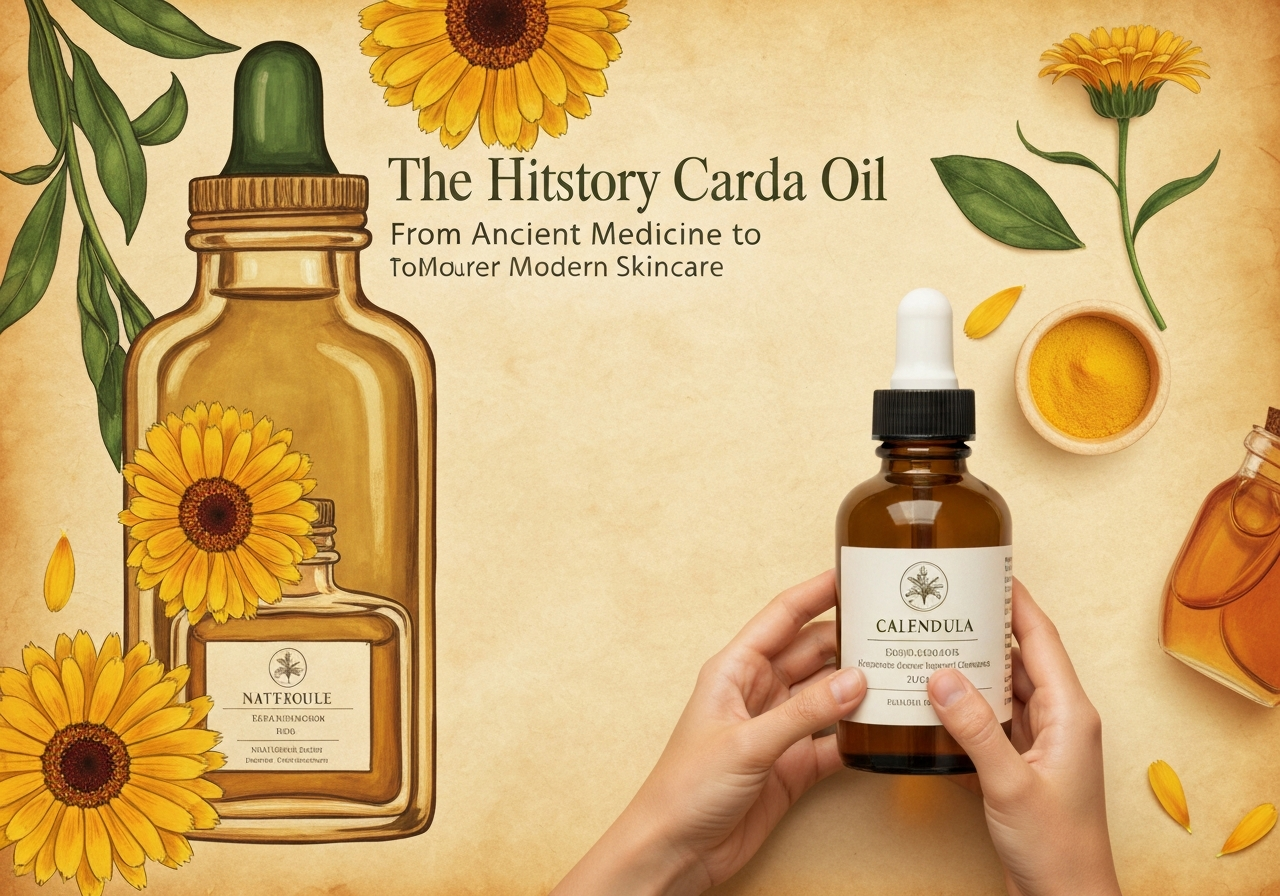
Medieval Preservation of Botanical Knowledge
The medieval period proved crucial for preserving and expanding calendula officinalis history through the dedicated work of monastic communities and Islamic scholars. During an era when much classical knowledge was lost, these institutions became guardians of botanical wisdom.
Monastic Garden Traditions
Medieval monasteries developed sophisticated garden systems that included dedicated plots for calendula cultivation. The famous "Plan of St. Gall" (circa 820 CE), a detailed monastery layout, specifically designates areas for "marigold" cultivation, using the medieval term that encompassed what we now know as calendula.
Monastic scribes created beautifully illustrated manuscripts that preserved not only growing techniques but also detailed observations of calendula's seasonal cycles, optimal harvesting times, and traditional preparation methods. The "Hortulus" by Walahfrid Strabo (808-849 CE) contains poetic descriptions of calendula that reveal both practical knowledge and deep appreciation for the plant's aesthetic qualities.
These religious communities developed innovative preservation techniques that allowed them to maintain calendula oil quality throughout long winters. Their methods included underground storage in cool, stable temperatures and the use of specific container materials that prevented oxidation—techniques that anticipated modern understanding of oil preservation.
Islamic Golden Age Contributions
Islamic scholars during the Golden Age (8th-13th centuries) made significant contributions to calendula knowledge, particularly in the areas of cultivation science and extraction methodology. Persian physician and philosopher Avicenna (980-1037 CE) included detailed calendula preparations in his medical texts, describing distillation techniques that represented major advances in oil production.
The translation movement that brought Greek and Roman texts into Arabic also facilitated the synthesis of classical knowledge with new Islamic innovations. Scholars like Al-Dinawari wrote comprehensive botanical treatises that included calendula alongside detailed agricultural instructions adapted for various climate zones across the Islamic world.
Islamic alchemists developed sophisticated laboratory equipment that improved calendula oil extraction efficiency. Their innovations in glassware, heating control, and measurement techniques laid groundwork for more scientific approaches to botanical processing that would eventually influence Renaissance chemistry.
Medieval Medical Schools
The emergence of formal medical education in medieval Europe created standardized curricula that included botanical studies. The Medical School of Salerno, often considered Europe's first medical school, incorporated calendula into its standard teachings, ensuring that knowledge about the plant's traditional uses was transmitted to successive generations of practitioners.
Medieval medical texts reveal sophisticated understanding of calendula's properties and appropriate preparation methods. These documents describe detailed protocols for oil infusion, including specific ratios of flowers to carrier oils and precise timing for each stage of the process.
Renaissance Botanical Studies and Documentation
The Renaissance marked a pivotal moment in calendula oil history, as renewed interest in classical learning combined with emerging scientific methods to create unprecedented understanding of botanical properties and cultivation techniques.
Herbalist Traditions and Printed Knowledge
The invention of the printing press revolutionized botanical knowledge dissemination. Pioneering herbalists like John Gerard, whose "Herball" (1597) became one of the most influential botanical texts in English, provided detailed descriptions of calendula cultivation and traditional uses that reached audiences far beyond medical professionals.
Gerard's work, along with that of contemporary herbalists like Nicholas Culpeper and John Parkinson, standardized calendula nomenclature and established systematic approaches to describing plant properties. These texts created a common vocabulary for discussing calendula that facilitated knowledge sharing across linguistic and cultural boundaries.
The Renaissance period saw the first detailed botanical illustrations of calendula, created through careful observation and artistic skill. These images, often hand-colored in printed books, captured morphological details that helped identify different calendula varieties and optimal specimens for oil production.
Scientific Revolution and Systematic Study
The Scientific Revolution brought new methodological rigor to calendula studies. Carl Linnaeus's systematic classification placed Calendula officinalis within a formal taxonomic framework, establishing the scientific naming convention we use today and facilitating more precise communication about different calendula species and varieties.
Renaissance natural philosophers began conducting controlled experiments with calendula cultivation, testing variables like soil composition, watering schedules, and harvest timing. These early scientific approaches yielded practical insights that improved both flower quality and oil extraction efficiency.
The period also saw innovations in laboratory equipment that enhanced calendula oil production. Improved distillation apparatus, better temperature control, and more precise measurement tools allowed for more consistent and higher-quality oil extraction.
Global Exploration and Plant Exchange
European exploration and colonization during the Renaissance facilitated global exchange of botanical knowledge and plant materials. Calendula seeds traveled to the Americas, where indigenous communities incorporated the flower into their own traditional systems, while European colonists brought back knowledge of New World plants that complemented calendula in various preparations.
This period of botanical exchange enriched understanding of calendula's adaptability to different climates and growing conditions. Detailed reports from colonial botanists described successful calendula cultivation in diverse environments, from the humid Caribbean to the arid American Southwest.
The global perspective gained during this era also revealed that calendula's traditional uses varied considerably across cultures, yet certain applications appeared consistently worldwide, suggesting intrinsic properties that transcended cultural differences in traditional knowledge systems.
Modern Extraction Methods and Scientific Understanding
The 19th and 20th centuries brought scientific revolution to calendula oil production, as advancing chemistry and technology transformed traditional extraction methods into precise, controlled processes that could consistently produce high-quality oils.
Industrial Revolution Innovations
The Industrial Revolution introduced mechanization to calendula cultivation and processing. Steam-powered equipment enabled large-scale oil extraction, while improved transportation networks allowed calendula flowers to be processed closer to optimal harvesting times, preserving more of their desirable qualities.
This period saw the development of standardized extraction procedures that could produce consistent results across different batches and seasons. Industrial chemists began analyzing calendula oil composition, identifying key compounds and developing methods to preserve them during processing.
The advent of chemical analysis revealed the complex molecular composition of calendula oil, including various carotenoids, flavonoids, and other compounds that contribute to its distinctive properties. This knowledge allowed processors to optimize extraction methods for maximum retention of these naturally occurring constituents.
20th Century Scientific Advances
The 20th century brought sophisticated analytical techniques that deepened understanding of calendula's chemical composition. Chromatography, spectroscopy, and other modern analytical methods allowed researchers to identify and quantify specific compounds within calendula oil, leading to better quality control and standardization.
Research during this period focused on understanding how different extraction methods affected oil composition. Studies compared traditional solvent extraction with newer methods like CO2 extraction, revealing how processing choices influenced the final product's characteristics.
Agricultural science advances also improved calendula cultivation. Selective breeding programs developed varieties with higher concentrations of desirable compounds, while improved farming techniques increased flower yields and quality consistency.
Contemporary Extraction Technologies
Modern calendula oil production employs sophisticated extraction technologies that would be unrecognizable to traditional practitioners. Supercritical CO2 extraction, for example, can produce oils with exceptional purity and potency while avoiding the use of potentially harmful solvents.
Temperature-controlled processing has become standard, as research revealed how heat affects different compounds within calendula flowers. Modern facilities can maintain precise temperature ranges throughout extraction, preserving temperature-sensitive constituents that might be lost in traditional processing.
Quality control measures now include detailed chemical analysis of each batch, ensuring consistency and purity that far exceeds what was possible with traditional methods. These advances have made high-quality calendula oil more widely accessible while maintaining the essential character that has made this botanical valuable for millennia.
Contemporary Applications in Skincare and Wellness
Today's skincare industry represents the culmination of thousands of years of calendula tradition, combining ancient wisdom with modern formulation science to create products that honor the flower's historical legacy while meeting contemporary quality standards.
Natural Skincare Renaissance
The late 20th and early 21st centuries have witnessed a remarkable renaissance in natural skincare, with calendula oil emerging as one of the most valued botanical ingredients. This revival draws directly from historical traditions while incorporating modern understanding of skin science and product formulation.
Contemporary skincare formulators study historical texts to understand traditional calendula preparations, then adapt these concepts using modern extraction methods and safety standards. This approach honors traditional knowledge while ensuring product safety and efficacy that meets today's regulatory requirements.
The calendula oil benefits recognized by modern users often mirror those valued by historical practitioners, suggesting continuity in how this botanical interacts with human skin across different eras and populations.
Artisan and Small-Scale Production
Alongside industrial production, there's been a resurgence of artisan calendula oil production that closely follows traditional methods. Small-scale producers often emphasize heritage varieties and time-honored processing techniques that connect contemporary users with calendula's rich history.
These artisan approaches frequently involve careful attention to growing calendula using sustainable, organic methods that mirror historical cultivation practices. Many producers study historical seed varieties and growing techniques to create products with authentic traditional character.
The artisan movement has also revived interest in regional calendula traditions, with producers specializing in varieties and processing methods specific to particular geographic areas or cultural traditions.
Integration with Modern Wellness Practices
Contemporary wellness culture has embraced calendula oil as part of holistic self-care routines that combine modern lifestyle approaches with traditional botanical wisdom. This integration demonstrates how historical plant knowledge continues to find relevance in contemporary contexts.
Modern aromatherapy practices often incorporate calendula oil alongside other traditional botanicals, creating complex formulations that draw from multiple historical traditions while addressing contemporary wellness goals.
The understanding of calendula oil properties has evolved to include both traditional observations and modern analytical findings, creating a comprehensive picture that respects historical knowledge while incorporating scientific insights.
Quality Standards and Regulation
Today's calendula oil industry operates under strict quality standards that ensure product safety and consistency while preserving the essential characteristics that have made this botanical valuable throughout history. These regulations balance innovation with respect for traditional knowledge.
Modern testing protocols can verify the presence and concentration of specific compounds associated with quality calendula oil, providing objective measures that complement traditional assessment methods based on color, scent, and texture.
International standards for organic and sustainable calendula production help ensure that contemporary cultivation practices support long-term environmental health, securing calendula's future availability for subsequent generations.
The Future: Sustainability and Innovation
As we look toward the future, calendula oil's remarkable history provides both inspiration and guidance for sustainable development that honors traditional knowledge while embracing beneficial innovations.
Sustainable Agriculture Practices
Modern calendula cultivation increasingly emphasizes sustainable practices that draw from traditional knowledge about soil health, companion planting, and natural pest management. These approaches recognize that long-term sustainability requires working with natural systems rather than against them.
Climate change presents new challenges for calendula cultivation, but historical records provide valuable insights into how different varieties performed under various environmental conditions. This historical perspective helps guide adaptation strategies for changing growing conditions.
Seed preservation efforts now focus on maintaining genetic diversity within calendula populations, recognizing that historical varieties contain traits that may become increasingly valuable as environmental conditions change.
Technology and Traditional Knowledge
Advanced agricultural technologies like precision farming and drone monitoring can enhance calendula cultivation while respecting traditional growing principles. These tools help optimize growing conditions based on real-time data while maintaining the careful attention to plant welfare that characterizes traditional cultivation.
Biotechnology offers possibilities for understanding calendula at molecular levels that complement traditional observational knowledge. However, the industry increasingly recognizes the importance of balancing technological capabilities with respect for traditional wisdom and natural processes.
Blockchain technology and other digital innovations may help preserve and share traditional calendula knowledge while ensuring that indigenous and traditional practitioners receive appropriate recognition and compensation for their contributions.
Global Collaboration and Knowledge Preservation
International collaboration among calendula researchers, cultivators, and traditional practitioners helps ensure that valuable knowledge from different cultures and regions is preserved and shared respectfully. These efforts recognize that calendula's global history represents collective human heritage.
Digital archives and databases now preserve traditional calendula knowledge that might otherwise be lost, making historical texts, cultivation techniques, and processing methods accessible to contemporary practitioners worldwide.
Educational programs that combine traditional knowledge with modern science help ensure that future generations understand both calendula's rich history and its potential for continued innovation and development.
Market Evolution and Consumer Awareness
Growing consumer interest in product provenance and traditional knowledge creates market opportunities for producers who can authentically connect contemporary calendula oil with its historical heritage. This trend encourages preservation of traditional knowledge and practices.
Educational marketing that shares calendula's fascinating history helps consumers understand the depth of tradition behind modern products, fostering appreciation for both historical knowledge and contemporary quality standards.
The premium market for heritage varieties and traditionally processed calendula oil demonstrates that consumers value authenticity and historical connection, supporting economic incentives for preserving traditional knowledge and practices.
Conclusion: Bridging Millennia of Botanical Wisdom
The journey of calendula oil from ancient temple gardens to modern skincare represents one of humanity's most enduring relationships with the botanical world. This remarkable history reveals how traditional knowledge, carefully preserved and thoughtfully adapted, continues to provide value in contemporary contexts.
Understanding calendula's rich past enhances appreciation for today's products while providing guidance for future development. The flower's ability to maintain relevance across diverse cultures and millennia of change demonstrates the enduring wisdom embedded in traditional botanical knowledge.
As we continue to explore calendula's potential through modern research and innovation, the lessons of history remind us that the most valuable advances often come from respectfully combining traditional wisdom with contemporary capabilities. The future of calendula oil lies not in abandoning its heritage but in thoughtfully building upon the foundations laid by countless generations of cultivators, healers, and botanical enthusiasts.
This historical perspective enriches every application of calendula oil today, connecting contemporary users with an unbroken chain of human experience that spans cultures, continents, and centuries. In choosing calendula oil, we participate in one of humanity's oldest and most cherished botanical traditions while contributing to its continued evolution and preservation for future generations.
"In every drop of calendula oil lies the accumulated wisdom of countless generations who recognized the extraordinary in what might appear ordinary—golden flowers that bridge the gap between earth's bounty and human wellbeing."