
The Science Behind Calendula Oil: Chemical Composition & Therapeutic Properties
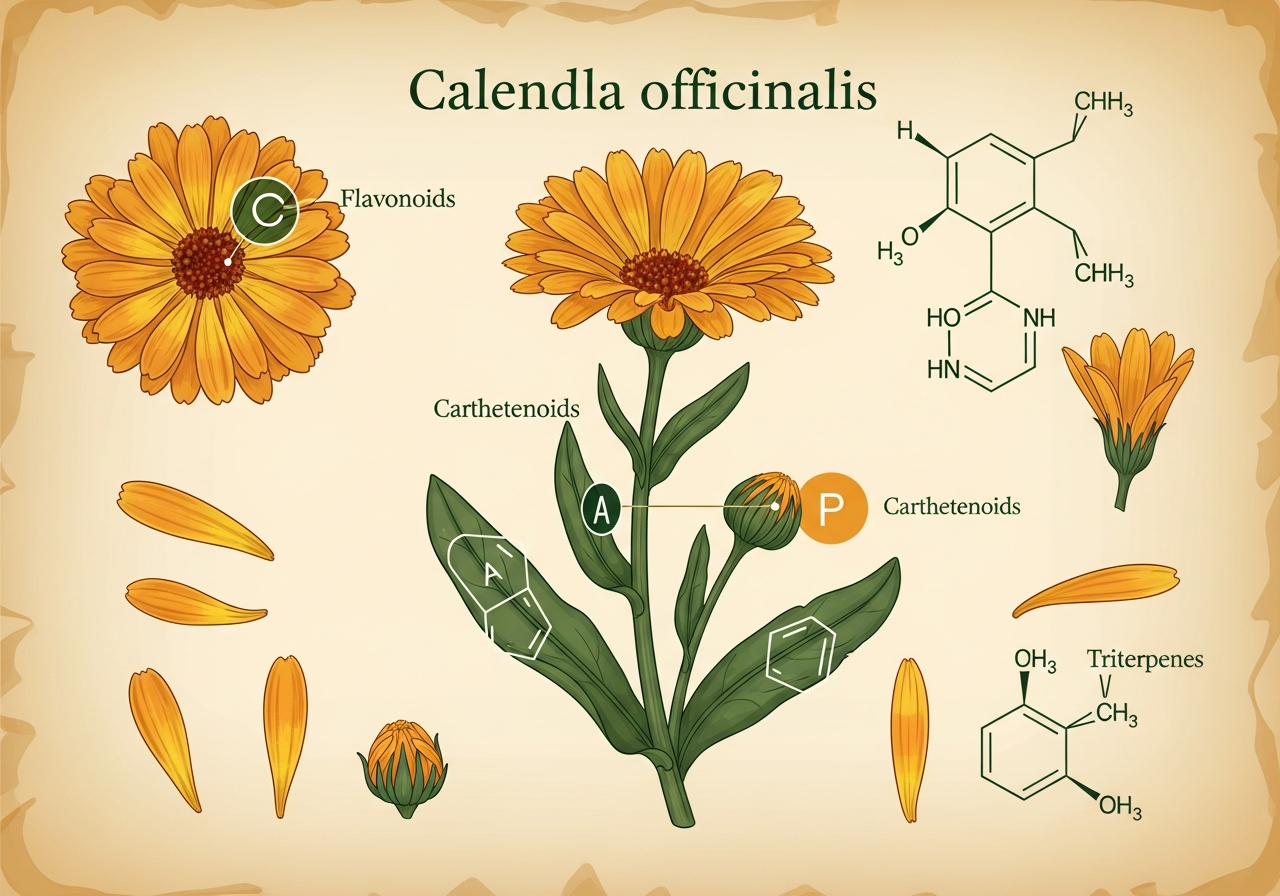
Calendula officinalis, commonly known as marigold, has captivated botanical researchers and traditional herbalists for centuries. The golden petals of this Mediterranean native yield an oil rich in complex chemical compounds that have sparked extensive scientific investigation. While we cannot make medical claims about calendula oil's effects, understanding its molecular composition provides fascinating insights into why this botanical extract has been treasured across cultures and generations.
This comprehensive guide delves deep into the science behind calendula officinalis oil, examining its intricate chemical makeup and the research surrounding its traditional applications. From triterpenes to flavonoids, we'll explore the compounds that give calendula oil its distinctive characteristics and examine what current research suggests about these naturally occurring substances.
Key Takeaways
- Calendula officinalis oil contains over 20 identified bioactive compounds
- Primary constituents include triterpenes, flavonoids, carotenoids, and essential fatty acids
- Research observations suggest these compounds may contribute to calendula's traditional uses
- Oil extraction method significantly impacts the final chemical composition
- Individual compounds work synergistically rather than in isolation
- Quality and potency vary significantly between sources and processing methods
Table of Contents
- Botanical Overview of Calendula Officinalis
- Extraction Methods and Their Impact on Composition
- Primary Chemical Constituents
- Secondary Compounds and Trace Elements
- Research Observations on Individual Compounds
- Synergistic Interactions Between Compounds
- Factors Affecting Chemical Composition
- Quality Assessment and Standardization
Botanical Overview of Calendula Officinalis
Before examining the chemical intricacies of calendula oil, it's essential to understand the botanical foundation from which these compounds originate. Calendula officinalis belongs to the Asteraceae family, sharing lineage with sunflowers, daisies, and chrysanthemums. This annual herb produces vibrant orange and yellow flowers that serve as the primary source material for oil extraction.
Plant Morphology and Active Tissue Distribution
The concentration of bioactive compounds varies significantly across different parts of the calendula plant. Research observations indicate that the flower petals contain the highest concentration of many sought-after compounds, particularly carotenoids and flavonoids. The flower heads, including both petals and reproductive structures, typically serve as the primary source material for high-quality calendula oil production.
Interestingly, some studies suggest that the stems and leaves also contain notable concentrations of certain triterpenes, though in lower quantities than the flowers. This distribution pattern influences extraction methods and explains why premium calendula oil properties are typically associated with flower-only preparations.
Seasonal Variation in Compound Production
The plant's chemical composition undergoes natural fluctuations throughout its growing cycle. Research indicates that peak compound concentration often occurs during the early to mid-flowering stage, typically occurring in mid to late summer in temperate climates. Environmental factors such as temperature, moisture, and soil composition may also influence the final chemical profile of the harvested material.
Extraction Methods and Their Impact on Composition
The method used to extract oil from calendula flowers significantly influences the final chemical composition and concentration of bioactive compounds. Different extraction techniques preserve or enhance certain compound classes while potentially degrading others.

Solvent Extraction
Traditional solvent extraction using carrier oils such as olive oil, sunflower oil, or jojoba oil remains one of the most common methods for producing calendula oil. This gentle process typically involves:
- Maceration of fresh or dried calendula flowers in the carrier oil
- Extended extraction periods ranging from several days to weeks
- Optional heat application to accelerate compound transfer
- Filtration to remove plant material
Research suggests that solvent extraction effectively preserves many of the heat-sensitive compounds while allowing for excellent extraction of fat-soluble constituents. The choice of carrier oil can influence the final product's stability and may contribute additional beneficial compounds.
CO2 Extraction
Supercritical carbon dioxide extraction represents a more modern approach that some research indicates may preserve a broader spectrum of compounds. This method offers several potential advantages:
- No residual solvents in the final product
- Lower processing temperatures that may preserve heat-sensitive compounds
- Selective extraction of specific compound classes
- Consistent reproducibility
Steam Distillation
While less common for calendula oil production, steam distillation can extract volatile compounds and essential oils. However, this method typically yields much lower quantities and may not capture many of the compounds traditionally associated with calendula's historical uses.
Primary Chemical Constituents
The remarkable properties that have made calendula oil a subject of scientific interest stem from its complex mixture of bioactive compounds. Research has identified numerous constituents, each contributing to the oil's overall chemical signature.
Triterpenes
Triterpenes represent one of the most significant compound classes in calendula officinalis oil. These naturally occurring compounds have been the subject of extensive research due to their presence in many traditionally used botanical preparations.
| Triterpene Compound | Typical Concentration Range | Research Observations |
|---|---|---|
| Faradiol | 0.3-0.8% | Most abundant triterpene; subject of numerous studies |
| Calenduladiol | 0.1-0.4% | Unique to calendula species |
| Arnidiol | 0.2-0.5% | Also found in arnica; research suggests similar properties |
| Erythrodiol | 0.1-0.3% | Common in many plant oils |
Faradiol, the most abundant triterpene in calendula oil, has been particularly well-studied. Research observations suggest that this compound may contribute to some of the traditional uses associated with calendula preparations. For those interested in learning more about how these compounds may support skin comfort, our detailed guide on calendula oil benefits provides additional insights.
Flavonoids
Flavonoids constitute another major class of bioactive compounds in calendula oil. These naturally occurring polyphenols are responsible for much of the plant's vibrant coloration and have been extensively studied across many plant species.
Key flavonoids identified in calendula include:
- Quercetin: A widely studied flavonoid found in many fruits and vegetables
- Isorhamnetin: A methylated derivative of quercetin with unique properties
- Rutin: A glycoside form of quercetin that may offer enhanced stability
- Narcissin: A flavonoid glycoside particularly abundant in calendula
Research suggests that flavonoids may work synergistically with other compounds in calendula oil, potentially contributing to the complex interactions that have made this botanical extract a subject of ongoing scientific interest.
Carotenoids
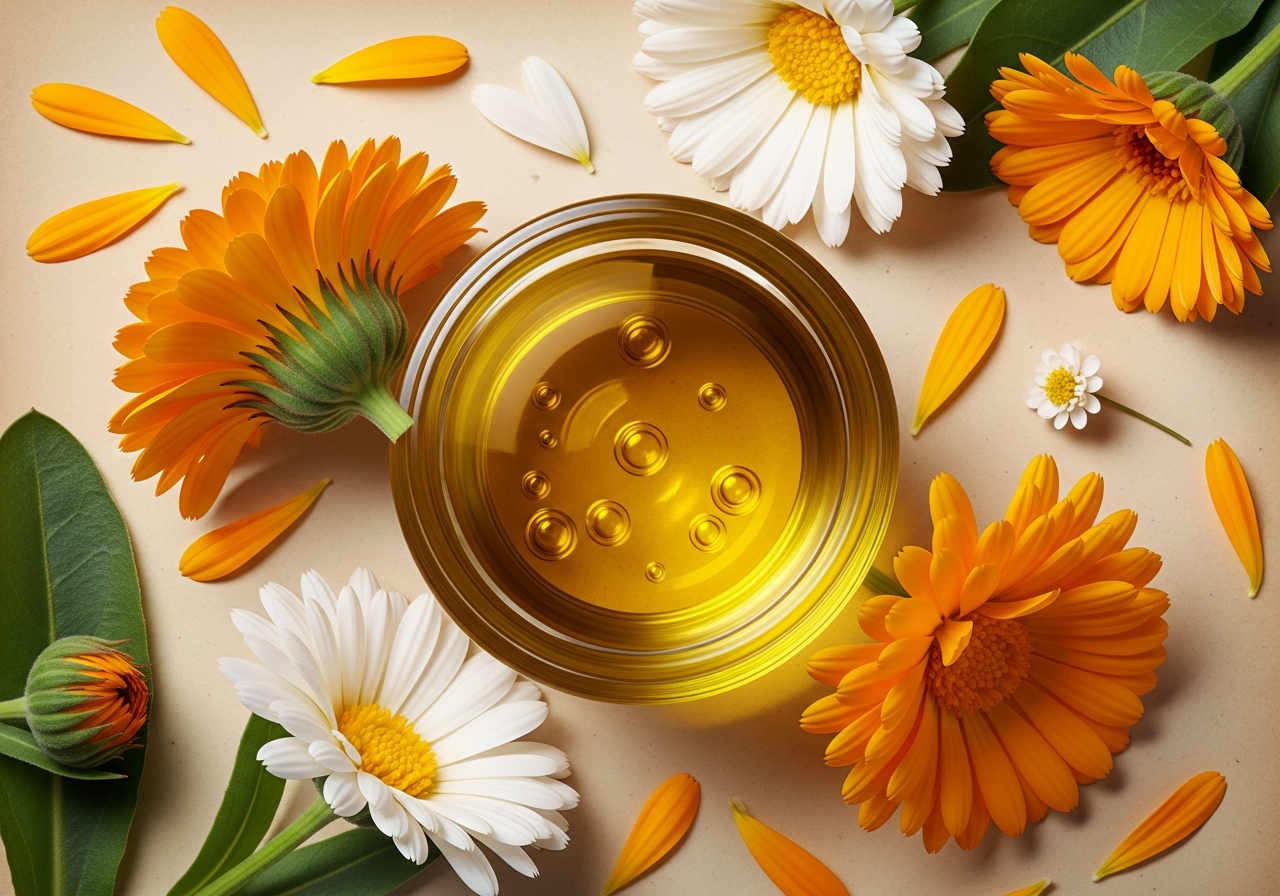
The golden-orange hue of calendula oil comes primarily from its rich carotenoid content. These pigment compounds serve multiple functions in the plant, including protection from UV radiation and attraction of pollinators.
Major carotenoids in calendula oil include:
- Lutein: A xanthophyll carotenoid also found in leafy green vegetables
- Beta-carotene: A precursor to vitamin A found in many orange-colored plants
- Lycopene: Though in smaller quantities, this carotenoid contributes to the oil's color profile
- Calendulaxanthin: A carotenoid that appears to be unique to calendula species
The concentration of carotenoids can vary significantly based on growing conditions, harvesting timing, and extraction methods. Higher carotenoid content typically correlates with deeper coloration in the final oil product.
Secondary Compounds and Trace Elements
Beyond the major compound classes, calendula oil compounds include numerous secondary metabolites and trace elements that may contribute to the oil's overall properties and stability.
Essential Fatty Acids
While the bioactive compounds receive most attention, the fatty acid profile of calendula oil (particularly when carrier oils are used in extraction) plays a crucial role in the oil's stability, absorption characteristics, and skin feel.
Common fatty acids present include:
- Linoleic Acid (Omega-6): An essential fatty acid important for skin barrier function
- Oleic Acid (Omega-9): A monounsaturated fatty acid that may enhance absorption
- Palmitic Acid: A saturated fatty acid that contributes to stability
- Stearic Acid: Another saturated fatty acid that affects texture and shelf life
Volatile Compounds
Gas chromatography analysis has identified numerous volatile compounds in calendula oil, though these are typically present in much lower concentrations than the major constituents. These compounds contribute to the oil's characteristic aroma and may play supporting roles in its traditional applications.
Notable volatile compounds include:
- Various terpenes and sesquiterpenes
- Aldehydes and ketones
- Esters and alcohols
- Phenolic compounds
Trace Minerals and Elements
Calendula flowers naturally accumulate various minerals from the soil, some of which may transfer to the oil during extraction. While present in very small quantities, these trace elements may contribute to the overall nutritional profile of the oil.
Research Observations on Individual Compounds
Scientific literature contains extensive research on many of the individual compounds found in calendula oil. While we cannot make health claims, examining these research observations provides valuable insights into why calendula has maintained its reputation in traditional botanical practices.
Triterpene Research
Faradiol, the predominant triterpene in calendula oil, has been the subject of numerous research studies. Laboratory observations suggest that this compound may interact with various cellular pathways, though the mechanisms are still being investigated. Some research has examined faradiol's effects in controlled laboratory settings, with results that align with calendula's traditional uses.
For readers interested in the specific research surrounding calendula's traditional applications for skin comfort, our comprehensive article on calendula oil anti-inflammatory properties provides detailed information about the current state of research.
Calenduladiol, unique to the calendula species, has received less research attention but preliminary studies suggest it may possess interesting properties worthy of further investigation. The relatively recent identification and isolation of this compound means that research is still in early stages.
Flavonoid Studies
The flavonoids present in calendula oil have been extensively studied, both individually and as part of complex botanical extracts. Quercetin, in particular, has been the subject of thousands of research papers, though most studies examine its effects when consumed orally rather than applied topically.
Research observations on calendula flavonoids include:
- Laboratory studies examining cellular interactions
- Investigations into molecular mechanisms
- Comparisons with other flavonoid-rich botanical extracts
- Studies on compound stability and bioavailability
Carotenoid Research
Carotenoids have been extensively studied across many plant species, and the research on calendula's carotenoid content builds upon this broader foundation of knowledge. Some research suggests that carotenoids may contribute to skin appearance and comfort, though individual responses can vary significantly.
Lutein, abundant in calendula oil, has been particularly well-researched, though primarily in the context of eye health when consumed as a dietary supplement. The topical applications of lutein-containing preparations like calendula oil represent a different area of investigation with its own unique considerations.
Synergistic Interactions Between Compounds
One of the most fascinating aspects of calendula oil's chemical composition is the potential for synergistic interactions between its various compounds. Rather than acting in isolation, research suggests that the compounds in calendula oil may work together in complex ways that enhance or modify their individual effects.
The Entourage Effect
The concept of the "entourage effect" - where compounds work together to create effects greater than the sum of their individual contributions - has gained significant attention in botanical research. While most famously associated with cannabis research, this principle may apply to many complex plant extracts, including calendula oil.
Potential synergistic interactions in calendula oil may include:
- Triterpene-Flavonoid Interactions: Some research suggests that flavonoids may enhance the stability or bioavailability of triterpenes
- Carotenoid-Fatty Acid Combinations: Fat-soluble carotenoids may be better absorbed in the presence of appropriate fatty acids
- Antioxidant Networks: Different classes of compounds may work together to provide more comprehensive antioxidant activity than individual components alone
Research on Whole Extract vs. Isolated Compounds
Several studies have compared the effects of whole calendula extracts with isolated individual compounds. While results vary, some research observations suggest that whole extracts may demonstrate different properties than would be predicted based solely on their individual components. This supports the importance of maintaining the complex chemical matrix present in high-quality calendula oil rather than focusing on single compound concentrations.
Our detailed analysis of calendula oil studies provides more information about research comparing whole extracts with isolated compounds.
Carrier Oil Interactions
When calendula oil is produced using carrier oil extraction methods, the choice of carrier oil may influence not only the extraction efficiency but also the final bioactivity of the product. Some research suggests that certain carrier oils may enhance the absorption or stability of calendula's bioactive compounds.
Factors that may influence compound interactions include:
- Fatty acid composition of the carrier oil
- Natural antioxidants present in the carrier oil
- Processing temperature and duration
- Storage conditions and packaging
Factors Affecting Chemical Composition
The chemical composition of calendula oil can vary significantly based on numerous factors throughout the production chain. Understanding these variables helps explain why different calendula oil products may have varying properties and why standardization remains challenging in the botanical oil industry.
Agricultural Factors
The growing conditions for calendula plants significantly influence the final chemical composition of the harvested flowers:
Climate and Weather: Temperature fluctuations, rainfall patterns, and seasonal variations all impact compound production. Research suggests that moderate stress conditions may sometimes increase the production of certain bioactive compounds as part of the plant's natural defense mechanisms.
Soil Composition: The mineral content and pH of the growing medium affects nutrient uptake and can influence the concentration of trace elements in the final oil. Organic growing practices may result in different compound profiles compared to conventional agriculture.
Harvesting Timing: The stage of flower development at harvest significantly impacts compound concentration. Peak bioactivity often occurs during specific phases of the flowering cycle, requiring precise timing for optimal results.
Geographic Origin: Calendula grown in different regions may show distinct chemical profiles, even when the same cultivation practices are used. This terroir effect is well-documented in many botanical products.
Processing Variables
The methods used to convert fresh calendula flowers into finished oil dramatically influence the final chemical composition:
Drying Methods: If flowers are dried before extraction, the drying temperature, humidity, and duration can affect compound stability. Some compounds may degrade during improper drying, while others may become more concentrated.
Extraction Parameters: Temperature, pressure, extraction time, and solvent-to-material ratios all influence which compounds are extracted and in what concentrations.
Post-Extraction Processing: Filtration, purification, and concentration steps can selectively remove or enhance certain compound classes.
Storage and Stability
Even after production, the chemical composition of calendula oil continues to evolve during storage:
Light Exposure: UV radiation can degrade sensitive compounds, particularly carotenoids and some flavonoids. This is why quality calendula oil is typically packaged in dark glass containers.
Temperature Fluctuations: Heat can accelerate chemical breakdown, while extreme cold may affect the oil's physical properties. Stable, cool storage temperatures help preserve compound integrity.
Oxygen Exposure: Many compounds in calendula oil are susceptible to oxidation, which can alter their properties and potentially create unwanted breakdown products.
Container Materials: The choice of packaging materials can influence the oil's stability over time. Some plastics may interact with oil components, while certain metals may catalyze oxidation reactions.
Quality Assessment and Standardization
Given the complexity of calendula oil's chemical composition and the many factors that can influence it, quality assessment and standardization represent significant challenges for both producers and consumers.
Analytical Testing Methods
Modern analytical chemistry provides several tools for assessing the composition and quality of calendula oil:
High-Performance Liquid Chromatography (HPLC): This technique effectively separates and quantifies many of the major compounds in calendula oil, particularly triterpenes and flavonoids. HPLC analysis can provide detailed compound profiles and help identify adulteration or poor-quality products.
Gas Chromatography-Mass Spectrometry (GC-MS): Particularly useful for analyzing volatile compounds and fatty acid profiles, GC-MS can identify trace components and verify the authenticity of calendula oil products.
UV-Visible Spectroscopy: This relatively simple technique can provide information about carotenoid content and overall color characteristics, serving as a rapid quality screening tool.
Nuclear Magnetic Resonance (NMR): Advanced NMR techniques can provide detailed structural information about compounds and help identify unknown constituents.
Standardization Challenges
Unlike synthetic products with consistent composition, natural botanical oils like calendula present unique standardization challenges:
Natural Variability: The inherent variation in plant-based materials means that no two batches of calendula oil will be chemically identical, even when produced under similar conditions.
Multiple Quality Markers: Rather than focusing on a single active ingredient, calendula oil quality assessment must consider multiple compound classes and their interactions.
Method Standardization: Different analytical methods may yield varying results, making it challenging to compare products tested by different laboratories.
Regulatory Considerations: The regulatory framework for botanical oils varies by country and intended use, affecting standardization approaches.
Industry Standards and Best Practices
Despite these challenges, several approaches have emerged for assessing calendula oil quality:
Marker Compound Analysis: Many producers focus on key compounds like faradiol or total flavonoid content as quality indicators, though this approach may miss important aspects of the oil's overall composition.
Fingerprinting Methods: Some laboratories use comprehensive chemical fingerprints that capture the overall chemical profile rather than focusing on individual compounds.
Organoleptic Assessment: Traditional sensory evaluation of color, aroma, and texture remains an important quality indicator, often correlating with chemical analysis results.
Batch Documentation: Comprehensive record-keeping throughout the production process helps ensure consistency and traceability.
"The complexity of calendula oil's chemical composition represents both a challenge and an opportunity. While this complexity makes standardization difficult, it also reflects the rich botanical heritage that has made calendula valued across cultures and centuries. Understanding this complexity helps us appreciate why high-quality calendula oil remains a subject of ongoing scientific interest."
Consumer Considerations
For those seeking high-quality calendula oil, understanding the basics of composition and quality assessment can inform purchasing decisions:
- Source Information: Reputable producers should provide information about growing conditions, extraction methods, and testing procedures
- Color and Aroma: High-quality calendula oil typically displays a rich golden-orange color and characteristic floral scent
- Packaging: Dark glass containers with proper sealing help preserve the oil's chemical integrity
- Third-Party Testing: Products tested by independent laboratories may provide greater assurance of quality and purity
- Extraction Method: Understanding whether the oil was produced using carrier oil extraction, CO2 extraction, or other methods can help set appropriate expectations
The science behind calendula oil reveals a fascinating world of molecular complexity that helps explain why this golden extract has maintained its reputation across cultures and centuries. From the triterpenes that give calendula its distinctive properties to the carotenoids that provide its characteristic color, each component contributes to a symphony of compounds that work together in ways researchers are still discovering.
While we cannot make medical claims about calendula oil's effects, understanding its chemical composition provides valuable context for its traditional uses and ongoing research interest. The synergistic interactions between compounds, the influence of production methods on final composition, and the challenges of quality assessment all contribute to the complex story of this remarkable botanical extract.
As research continues to uncover new aspects of calendula oil's chemistry, one thing remains clear: the complexity that makes standardization challenging is also what makes this natural product so intriguing to scientists, producers, and users alike. Whether you're a researcher investigating botanical compounds, a producer seeking to create high-quality products, or simply someone interested in understanding what makes calendula oil special, appreciating the science behind its composition enriches our understanding of this golden gift from nature's pharmacy.